Pick a city, then pick your pace
Every China city guide below is built around the same questions: what should a first-timer see? What’s overrated? Where do locals actually eat? And how do you get around without getting lost? Start with the four cities most visitors fit into a first trip.
Things to do in Beijing

This Beijing travel guide starts with what first-timers actually need. Beijing is where China’s history is most visible — the Forbidden City, the Great Wall, and the hutong alleys are all essential — but the city is huge, so grouping sights by area saves hours.
- Forbidden City: book tickets days ahead online (passport required at entry)
- Great Wall at Mutianyu — fewer crowds than Badaling and a toboggan ride down
- Hutong alleys: walk or take a courtyard-cafe break
- Temple of Heaven early, before the tour buses land
Detailed Beijing guide in progress — we’ll add it here when ready.
Things to do in Shanghai
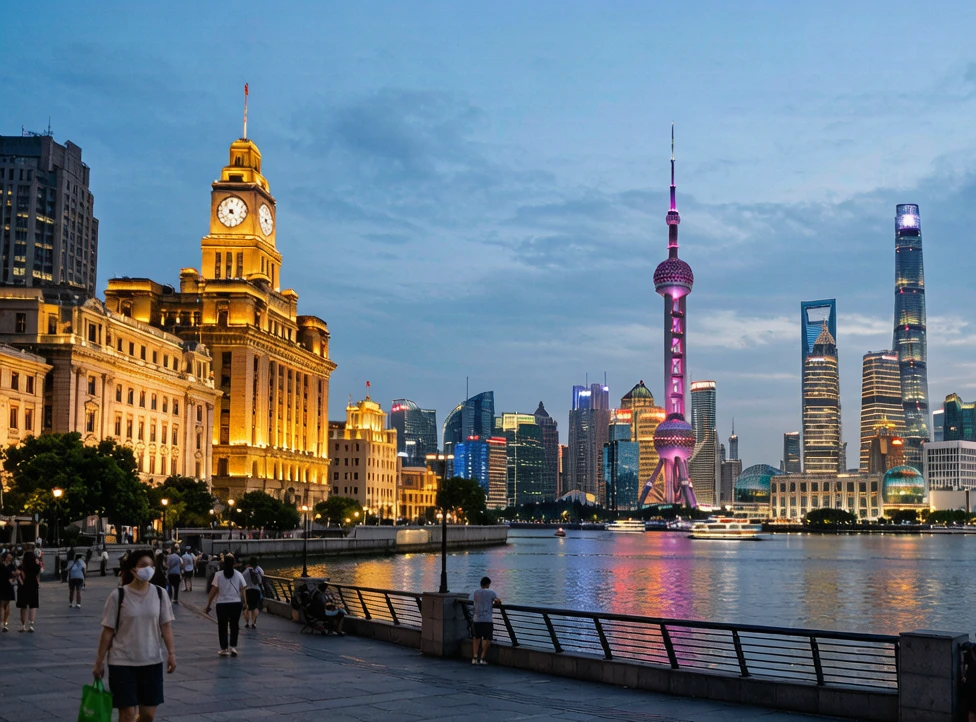
Shanghai is the easiest city for a first China trip. It’s walkable, metro-friendly, and mixes old colonial architecture with one of the world’s most futuristic skylines.
- The Bund at sunrise and after dark
- Yu Garden and the old city lanes
- Tianzifang for narrow streets and coffee
- Lujiazui skyscrapers viewed from the river ferry
Detailed Shanghai guide in progress — we’ll add it here when ready.
Things to do in Chengdu

Chengdu is relaxed, delicious, and home to the pandas. It’s the best introduction to southwestern China, and the city most food-lovers are sent to first.
- Giant Panda Base: arrive at opening (around 7:30) when pandas are most active
- Hot pot and Sichuan street food in the old teahouse districts
- People’s Park teahouse culture and ear-cleaning chairs
- Day trip to the Leshan Giant Buddha (1 hr high-speed train each way)
Detailed Chengdu guide in progress — we’ll add it here when ready.
Things to do in Xi’an
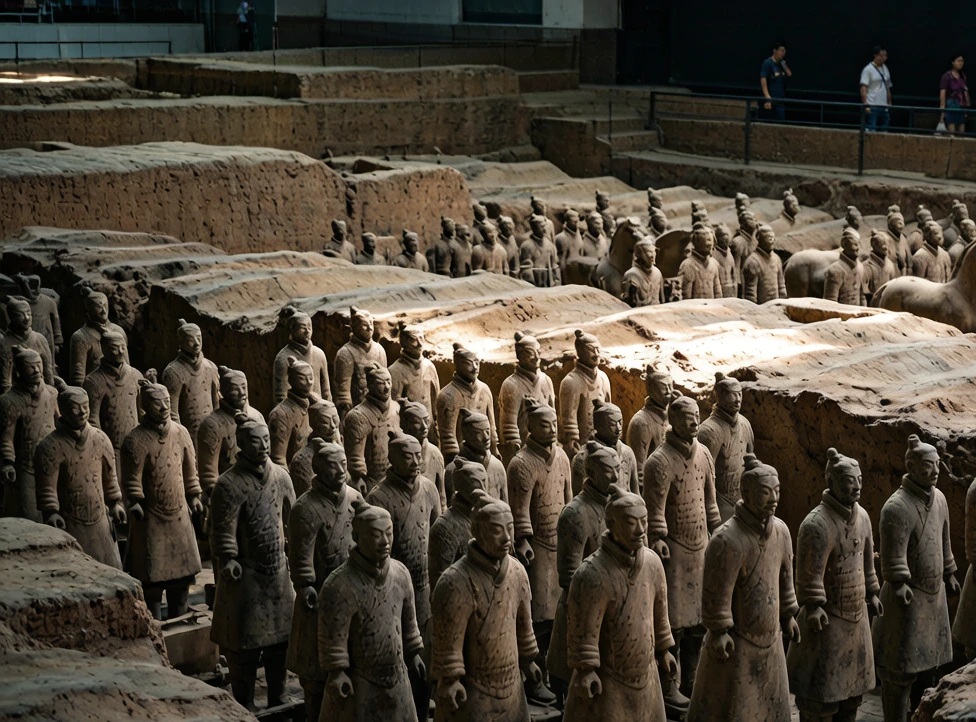
Xi’an is smaller and slower than Beijing or Shanghai, which makes it ideal for a first China trip. The Terracotta Warriors are the headline, but the Muslim Quarter and city wall are just as memorable.
- Terracotta Warriors — go early; it’s 1 hr from the city
- Bike the city wall (rentals at the South Gate)
- Muslim Quarter street food at night
- Drum and Bell Towers lit up after dark
Detailed Xi’an guide in progress — we’ll add it here when ready.
Sample China itineraries
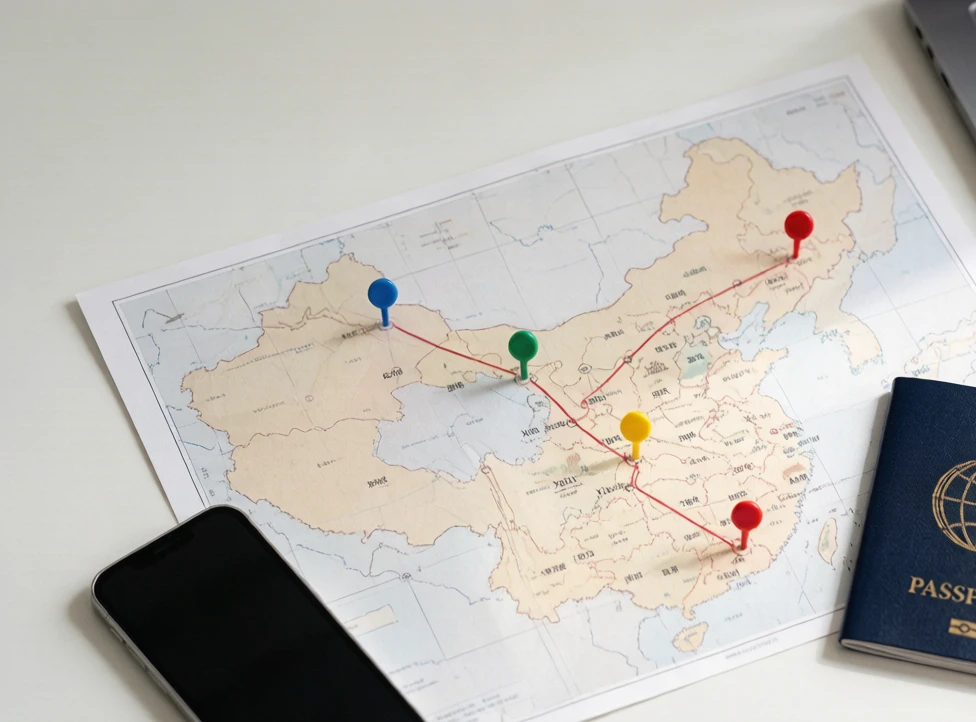
If you don’t know where to start, these routes are balanced for first-timers: history, food, and manageable train hops between cities.
Classic first trip
Beijing (3) → high-speed train → Shanghai (3) → fly home. The simplest taste of old and new China.
Full day-by-day plan in progress
History + food
Beijing (3) → Xi’an (2) → Chengdu (3) → Shanghai (2). Adds the warriors and the pandas.
Full day-by-day plan in progress
Deep dive
Beijing → Xi’an → Chengdu → Guilin/Yangshuo → Shanghai. For a second or longer trip.
Full day-by-day plan in progress
Not sure which city fits your trip?
Start with the pre-trip checklist, then match your days to the city guides that fit your pace.
Other pillars
Four pillars take you from landing to leaving. Start with the basics, then go deep on each.
Frequently asked questions
Which China city should a first-timer visit?
Most first trips start with Beijing (history) and Shanghai (modern China), then add Chengdu for food and pandas or Xi’an for the Terracotta Warriors. Two to four cities in 10–14 days is a comfortable pace.
How many days do I need in Beijing?
Three full days covers the Forbidden City, a Great Wall day at Mutianyu, and the hutongs without rushing. Add a fourth if you want the Summer Palace or a Temple of Heaven morning.
Is Shanghai easy to get around as a tourist?
Yes. The metro is clean, bilingual, and reaches nearly everywhere; Alipay or WeChat transport codes work at the gate. The Bund, Yu Garden, and Lujiazui are all metro-accessible.
When is the best time to visit China’s cities?
Spring (April–May) and autumn (September–October) are best: mild weather, clear skies, and fewer crowds than summer or the October National Day week. Beijing’s Forbidden City and the Great Wall are most comfortable in autumn; Chengdu and Guilin are pleasant in spring. Avoid the first week of October and the Chinese New Year travel rush if you can.
When is the best time to see the pandas in Chengdu?
Arrive at the Giant Panda Base when it opens (around 7:30 AM). Pandas are most active in the cool morning and quieter by midday, so an early start means better sightings and smaller crowds.
Can I bike on the Xi’an city wall?
Yes. Bike rentals sit at the South Gate (Yongningmen); a full loop is about 14 km and takes roughly 1.5–2 hours. Go late afternoon for softer light and cooler air.
How do I connect the cities — train or flight?
High-speed rail links most first-timer routes (Beijing–Shanghai is about 4.5 hours). Flights make sense for longer hops like Chengdu–Guilin. Book trains on 12306 or Trip.com; see the Getting Around pillar for the full setup.