How to Pay in China (2026): Alipay, WeChat & Cash
China is largely cashless, and knowing how to pay in China in 2026 is one of the first things to sort out before you fly. The good news: you can link your home Visa or Mastercard directly to Alipay (and WeChat Pay) — no Chinese bank account needed. This guide walks you through the two apps to set up, what still needs cash, the 3% foreign-card fee that surprises people, and the exact steps to take before you board.
Set up Alipay → Get the free checklistHow to pay in China in 2026: the short answer

Set up Alipay and WeChat Pay before you fly, link a Visa or Mastercard to each, carry a small amount of cash. That is the full plan for a first-time visitor. Everything below is the detail and the backup options.
- Primary: Alipay. The single most widely accepted app, with the smoothest foreign-card setup and built-in Didi, Metro, and food delivery.
- Backup: WeChat Pay. Use it for group transfers, some local vendors, and the occasional QR code that only goes through WeChat.
- Backup of the backup: cash. About 500 to 1,000 RMB covers street food, taxis that will not take QR, temple donations, and rural areas.
- What you do not need: a Chinese bank account, a Chinese phone number, or a special tourist card. Your home Visa or Mastercard works directly.
Five ways to pay in China, side by side

You do not need all five. Most visitors do fine with Alipay plus a little cash — but it helps to know what each one is for.
| Method | Best for | Foreign card? | Still needed? |
|---|---|---|---|
| Alipay | Almost everywhere | Yes | Recommended |
| WeChat Pay | Groups, some vendors | Yes | Optional |
| Cash (RMB) | Taxis, small shops | n/a | Yes, backup |
| UnionPay card | ATMs, big merchants | Home card | Handy |
| Foreign credit card | Hotels, malls | Yes | Sometimes |
Alipay: your default payment app
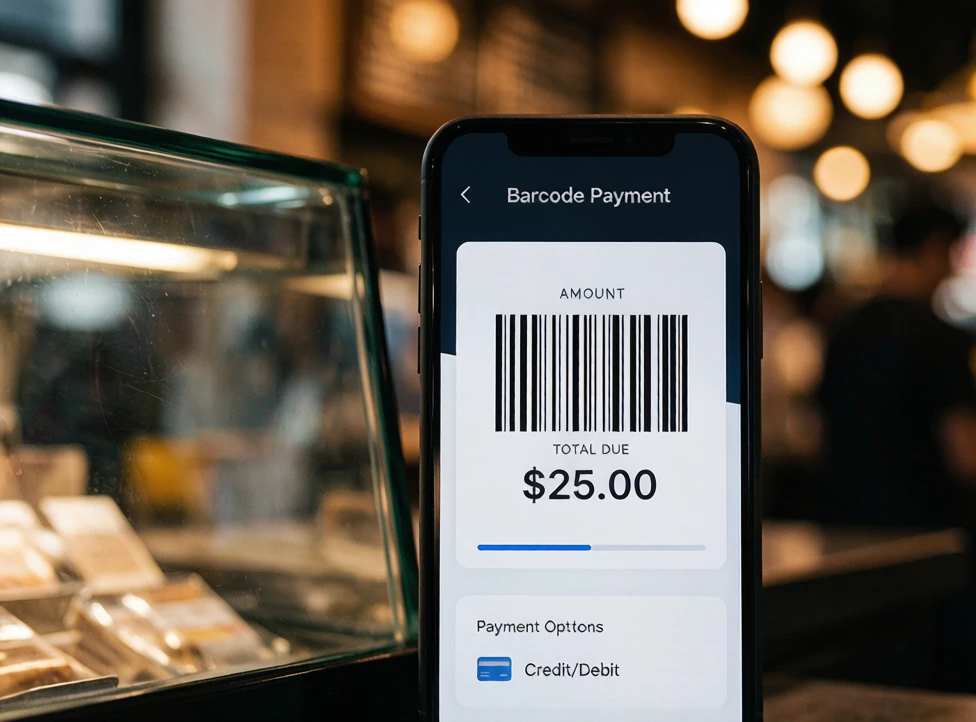
Alipay is the app to set up first. It is the most widely accepted, has the smoothest foreign-card flow, and the highest chance your first try at a counter will just work.
- Download and register at home, not at the airport. You need reliable internet and your home SMS to receive the verification code. Airport Wi-Fi and roaming SMS are unreliable, and a failed setup at the wrong moment can lock your account for 24 hours.
- Link a physical Visa or Mastercard. Virtual cards (Revolut, Wise virtual), prepaid cards, and most American Express cards are declined. Use a real embossed Visa or Mastercard. The cardholder name must match your passport exactly — middle names, initials, and accents count.
- Complete passport verification (eKYC). Scan the photo page and do the face-recognition check. This is what unlocks normal payment limits. Without it, daily spending is capped very low and many transactions are declined.
- Call your bank before you fly. Many banks automatically block the first Chinese charge as suspected fraud. A 2-minute call to your bank’s international line saying you will be using the card in China saves a frozen card at a restaurant.
- Turn your VPN off before paying. Alipay’s risk-control flags foreign VPN connections and will either fail the payment or temporarily lock the account. Pay with the VPN off, then turn it back on for Gmail and WhatsApp.
- How to pay at the counter. Either scan the merchant’s QR sticker and enter the amount, or tap “Pay” to show your own QR code for the cashier to scan. Both work.
The 3% foreign-card fee. Single transactions of 200 RMB or less are fee-free on the platform. Any single charge over 200 RMB carries a roughly 3% service fee, charged on the full amount. A 500 RMB purchase costs about 15 RMB in fees. For purchases near the threshold, ask the merchant to split the bill so each charge stays at or under 200 RMB. Your card issuer may add a separate 1 to 3% foreign-transaction fee on top — check your card terms before you go.
Full Alipay setup walkthrough →WeChat Pay: the backup that covers what Alipay misses
WeChat is China’s everything app: chat, taxi, food delivery, ticket booking. WeChat Pay rides on the same account. Setup is almost identical to Alipay, with a few quirks worth knowing.
- Open WeChat, go to Me → Services → Wallet. Add a Visa, Mastercard, or JCB. Complete passport verification in the same flow. Do it at home while your home internet is reliable.
- Ask a friend to scan your registration QR. New WeChat accounts sometimes need an existing verified WeChat user to scan a one-time QR code. This is WeChat’s anti-spam measure, and for overseas-number sign-ups it is usually required. Arrange it before you travel if you know anyone on WeChat.
- Where it shines. Splitting bills in a group chat (very common in China), some local vendors who only take WeChat, and the occasional merchant whose Alipay sticker is broken. It is also the way you order taxis inside the WeChat Didi mini-program if you prefer to live entirely in WeChat.
- Where it is weaker than Alipay. Foreign-card verification can fail more often, and daily limits are sometimes tighter. The honest rule: lead with Alipay, keep WeChat Pay as the backup.
- Turn your VPN off here too. Same reason as Alipay. VPN-on means a likely payment failure or temporary account freeze.
Cash, cards, and ATMs: when you still need them
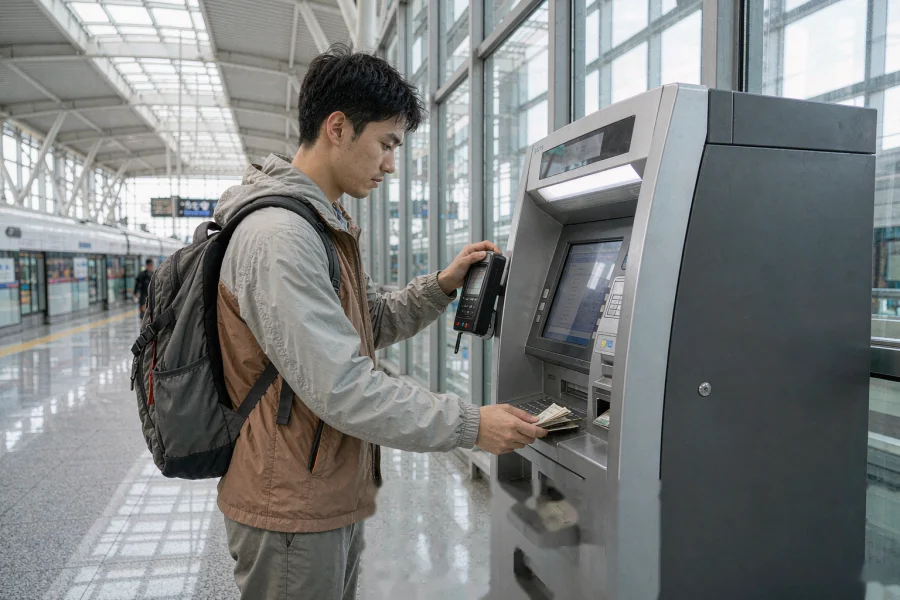
Mobile pay covers about 99% of urban transactions. The remaining 1% is exactly the moments you do not want to be without a backup.
- A little cash (500 to 1,000 RMB). Street food stalls, temple donation boxes, some rural areas, the occasional taxi whose driver does not run a personal QR, and the rare power outage. Withdraw once you arrive, not before — your home bank will give you a poor exchange rate.
- ATMs. Bank of China and ICBC accept foreign cards most reliably. Use a bank-owned ATM (not a private one in a mall) to avoid the extra 20 to 30 RMB surcharge. Per-transaction limit is usually about 3,000 RMB at Bank of China and ICBC (some other banks set it a bit lower). Tell your bank you are traveling, or the ATM will decline you.
- Foreign credit cards, direct. Physical Visa and Mastercard work at international hotels, airport shops, and the big department stores in tier-1 cities. They are not accepted at local restaurants, taxis, or convenience stores. Do not plan around them.
- Apple Pay and Google Pay do not work. Almost no merchant in mainland China has an NFC terminal. Contactless tap-to-pay is essentially useless here. This is the single biggest surprise for travelers who assume mobile pay means Apple Pay.
In practice: what to reach for at each moment
A quick reference for the common situations, from a restaurant to a high-speed train.
Alipay scan of the QR sticker on the table, or cash if it is a small noodle shop. The waiter will not bring a card machine.
Book a Didi inside Alipay or WeChat. Pay with the app. Do not hail a street taxi and try to hand over a foreign card — it ends in a long, polite argument.
Cash, or Alipay. Some small vendors use a personal QR code that occasionally rejects foreign-linked cards. Have 20 RMB notes ready.
Book in the Trip.com, Alipay, or 12306 app before you go. Pay with Alipay. No foreign card accepted at the station counter.
Foreign card usually fine. Keep a few hundred RMB cash for the deposit and for the small shops around the hotel.
WeChat group transfer. You will be added to a group and everyone sends their share in a few seconds. This is the one thing that is genuinely easier with WeChat.
Four 2026 money tips first-timers always miss
These are the small, specific rules that decide whether a payment works the first time. None of them appear on a sign at the counter.
- The 3% threshold is 200 RMB, not 200 dollars. A single charge of 201 RMB incurs a roughly 3% platform fee on the full 201. Keep individual purchases small, or ask the merchant to split.
- The name on your card must match your passport exactly. A middle name on the passport but not the card (or vice versa) is the most common reason a foreign card bounces. If the embossed name is “J. SMITH” and the passport says “JANE A SMITH”, use a different card.
- Apple Pay and Google Pay are not payment options here. A small minority of high-end hotels and the official Apple resellers accept them. For everything else, it is QR codes or cash.
- Set up a test payment before you leave home. A 1 RMB charge to your Alipay account tells you, in 10 seconds, that the card is linked, the bank is not blocking, and the VPN is off. Do it before the plane.
Your China payment setup checklist
Run through this the week before you leave. It is the difference between paying on day one and standing at a counter with a queue building behind you.
- Download Alipay (and WeChat as the backup) while you still have your home App Store.
- Link a physical Visa or Mastercard — virtual and prepaid cards are rejected.
- Complete passport verification (eKYC) inside both apps. This unlocks the normal payment limits.
- Call your bank’s international line and tell them you will be using the card in China.
- Make a 1 RMB test payment to confirm the setup works end to end.
- Carry 500 to 1,000 RMB in cash for street food, taxis, and temples.
- Pack a power bank — a dead phone is the single most common first-day mistake.
- Arrange a WeChat-using friend to scan your registration QR if you are new to WeChat.
Three payment setups to sort out first
How to pay in China: FAQ
Can I pay in China with just a foreign credit card?
Not really. Outside international hotels, large department stores, and airport shops, card terminals are rare. Most restaurants, taxis, convenience stores, and street-food stalls take only Alipay, WeChat Pay, or cash. Plan on setting up Alipay before you fly; foreign cards are at best a backup, not a primary.
Do I need a Chinese bank account to use Alipay or WeChat Pay?
No. Since 2023, both apps let you link a foreign card directly — Visa, Mastercard, JCB, Discover, Diners Club, American Express, or an international UnionPay card — then complete a one-time passport verification. You can pay across the country with no Chinese account, no Chinese phone number, and no special tourist card. A small 3% service fee applies to single charges over 200 RMB. In practice Visa and Mastercard are the most reliable; American Express is accepted far less often, so default to Visa or Mastercard.
Which should I set up first, Alipay or WeChat Pay?
Alipay first. Its foreign-card setup is smoother, the verification engine declines fewer cards, and the acceptance is widest. Add WeChat Pay when you have a moment — it is genuinely useful for splitting bills in group chats and for the occasional vendor whose QR is WeChat-only.
Why did my Alipay or WeChat Pay payment fail?
The three most common reasons, in order: your VPN was on (Alipay and WeChat detect it and either reject the charge or freeze the account for 24 hours), the cardholder name does not match your passport exactly (a middle-name difference is enough), or your bank blocked the first foreign charge as suspected fraud. Turn the VPN off, double-check the name, and call the bank. If the account was frozen, open the app and follow the in-app unlock steps.
Is there a fee for paying with a foreign card in China?
Yes, above a small threshold. Single charges of 200 RMB or less are platform-fee-free on Alipay and WeChat Pay. Any single charge over 200 RMB carries a roughly 3% service fee, charged on the full amount. Your home card issuer may add a separate 1 to 3% foreign-transaction fee on top. To avoid the platform fee, keep individual purchases at or under 200 RMB or ask the merchant to split the bill.
Do Apple Pay and Google Pay work in China?
Effectively no. The vast majority of merchants in mainland China use QR-code terminals, not NFC. Outside a handful of international hotels, high-end malls, and the official Apple resellers, contactless tap-to-pay will not work. Plan on Alipay, WeChat Pay, or cash.
Set up Alipay before you fly
Our step-by-step Alipay walkthrough gets a first-timer from download to first payment in about 15 minutes, including the passport verification step that most guides skip. Pair it with an eSIM and you are paying before the airport taxi queue.
Alipay setup walkthrough → Get the free checklist