Why take the metro in China
A typical metro ride costs ¥3–6 and beats surface traffic every time. Beijing, Shanghai, Guangzhou, Shenzhen, Chengdu, Xi’an, Hangzhou, Chongqing, Nanjing and Wuhan all run large networks — and most tourist sights sit a short walk from a station.
A few yuan a ride
Fares are distance-based and tiny. You’ll rarely spend more than ¥10 to cross a whole city.
No traffic, ever
It runs on its own track. Rush hour is crowded but never gridlocked like the roads above.
Connects to everything
Airports, train stations, and your hotel district almost always sit on a line. Getting Around covers the last mile the metro doesn’t.
Which Chinese cities have a metro
Over 40 mainland Chinese cities now run a metro or light-rail system. These are the ones you’re most likely to visit as a first-timer, with what each one is best known for.
Smaller systems are also opening fast in Changsha, Qingdao, Kunming, Harbin, Dalian, Zhengzhou, Hefei, Nanchang, Nanning, Guiyang, Wuxi, Foshan and others. See the city guides for the full picture.
How to pay for the metro in China
You don’t need to line up for a paper ticket. In most cities your phone is the ticket — scan a code at the gate and walk in.
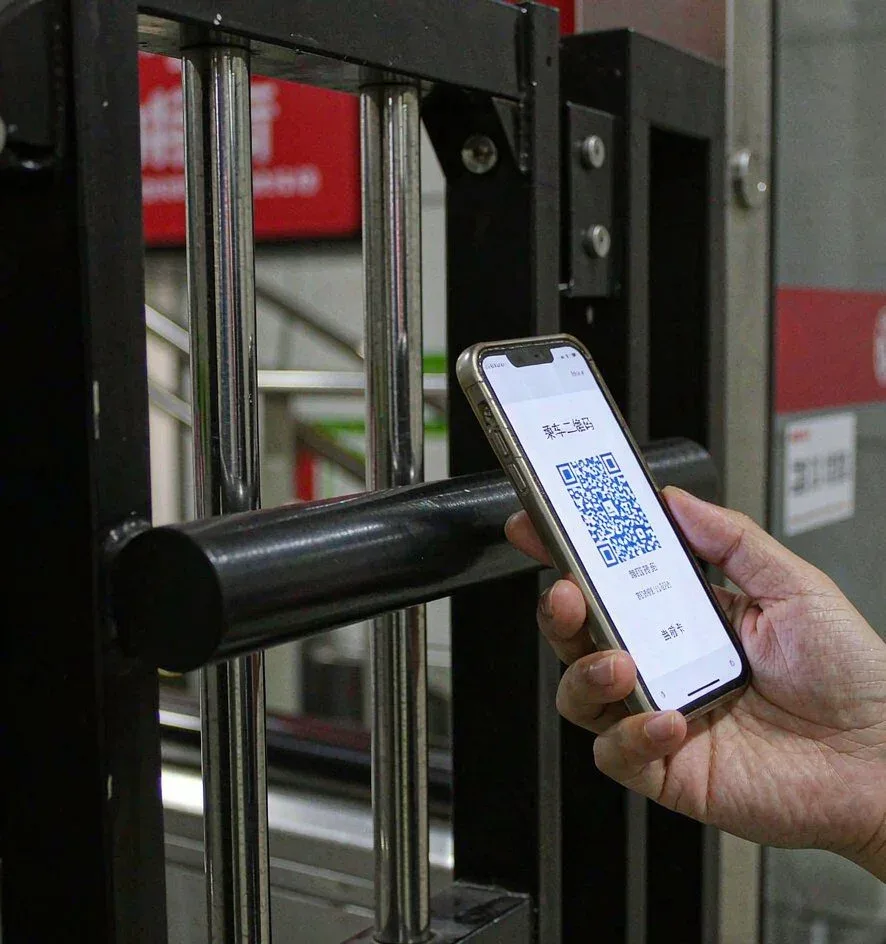
Alipay / WeChat QR
Open the “Transport” tab, activate the QR code for that city (each city is a separate code), and scan it at the gate. Set up Alipay first — see our VPN, eSIM & Alipay guide.
Foreign card tap-in
In Beijing and parts of Shanghai, Visa or Mastercard contactless works at selected gates. Slightly higher per-ride fee than local payment, but no app setup required.
Single-ride token / city card
Buy a paper ticket or a rechargeable metro card at any station counter. Top up with cash or Alipay. Refund the leftover balance before you fly home.
Tourist day pass
Some cities (Beijing, Shanghai, and a few others) sell 1–3 day unlimited passes at major stations. Worth it only if you’re hopping on and off all day.
Etiquette: a few habits that help
Stand to the sides of the doors
Let people off before you board. It’s the local norm and it actually speeds everyone up. The painted arrows on the floor show you where to line up.
Expect a bag scan at entry
Every station has an X-ray at the gate. It’s quick — you keep your shoes, belt, and laptop. Just have your bag ready to send through.
Don’t eat or drink on the train
It’s frowned upon and enforced on many lines. A water bottle with the cap on is fine; save the snack for the platform or street level.
Getting from the airport by metro
Most major airports in China sit on a metro line, which beats a taxi at rush hour. A few good ones:
- Beijing — Capital Airport (Airport Express; transfer to Line 2 at Dongzhimen or Line 10 at Sanyuanqiao) and Daxing Airport (Daxing Airport Express).
- Shanghai — Hongqiao on Line 2/10, Pudong on the Maglev then Line 2.
- Guangzhou — Baiyun on Line 3 (North extension).
- Shenzhen — Bao’an on Line 11, runs right into the terminal.
- Chengdu — Shuangliu on Line 10, Tianfu via Line 18.
Allow extra time for security, and confirm the right terminal first. See the Getting Around pillar for the full airport-transport picture.
Common questions
Not if you use Alipay/WeChat QR or a foreign card at the gate. Cash only matters if you buy a physical ticket or city card at the counter.
Yes — it’s well lit, staffed, and heavily used late into the evening. Trains generally stop around 11 p.m.; some lines run later, so check yours. DiDi takes over after that.
Major lines in Beijing and Shanghai announce stops in English too. In smaller cities, follow the line colour on the map and count your stops — or watch the map in your navigation app.
Yes. Most lines allow it, and you’ll see people with suitcases. Avoid the 7:30–9:30 a.m. and 5–7 p.m. rush hours when space is tight, and use the wide gates at the end of the row.
Roughly 7:30–9:30 a.m. and 5–7 p.m. on weekdays, especially on lines through the business districts (e.g. Beijing Line 10, Shanghai Line 2). Mid-morning and after 8 p.m. are calm.
Every station exit has a letter and a small map of what’s on the street side. Before you tap out, check the overhead sign to leave from the exit closest to where you’re going.
Set up payment before you fly
Alipay is the key that unlocks metro QR, DiDi, and almost every shop. Get it working at home and the rest falls into place.