China High-Speed Rail: The Easiest Way to Travel Between Cities
Here’s our full guide to China high speed rail. China runs the world’s largest high-speed rail network — more than 50,000 km of track, with trains reaching 350 km/h. For most visitors it’s faster door-to-door than flying once you add airport time, and a lot more comfortable. Here’s what to expect before you board.
Why travelers pick the train over flying
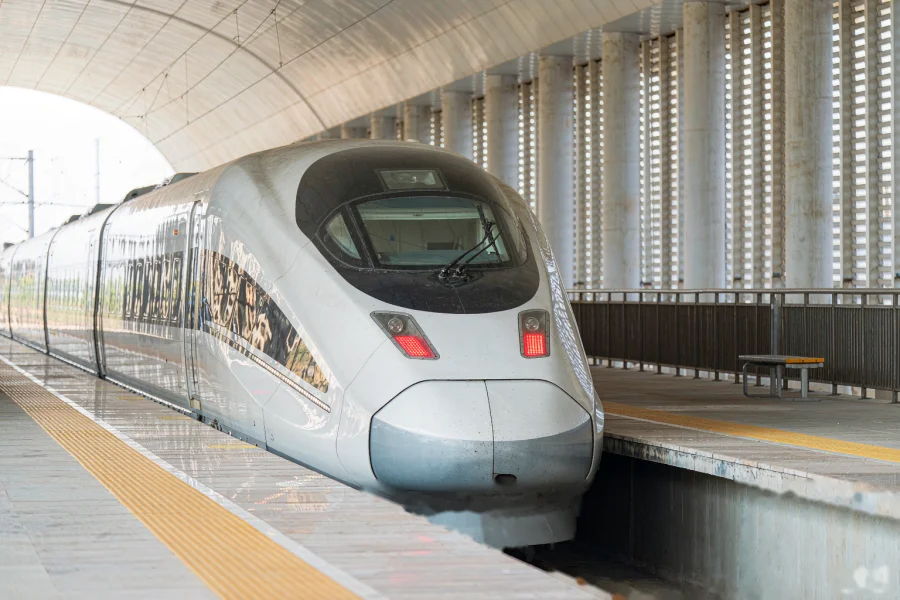
Once you add the two hours you lose to airport security and the city-to-airport transfer on both ends, a high-speed train between nearby cities often wins. The stations sit in the heart of town, trains leave on time, and you keep your phone signal the whole way.
Reliably on time
Chinese high-speed trains run at roughly 99% punctuality. The “gate closes 15 minutes before” rule is real, but delays are rare.
City-center to city-center
Stations are downtown and connect straight to the metro. No 45-minute ride to an airport on the edge of the city.
Comfortable, connected
Power outlets at every seat, clean toilets, and space to stand up and walk. Many trains have free Wi-Fi (SMS-verified with a Chinese number).
Actually scenic
The Beijing–Shanghai line and the routes into Guilin or Sichuan cross real landscape, not just clouds.
The three classes, and what they cost
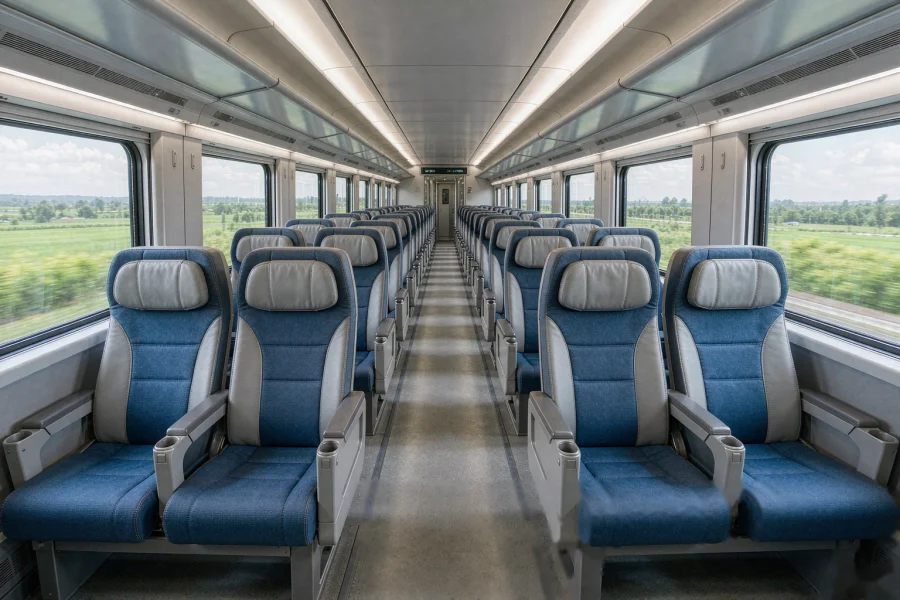
On the flagship Beijing–Shanghai G-train (1,318 km, under 4.5 hours) the walk-up fares look like this. Routes vary, but the gap between classes is consistent.
Fares shift with season and demand, just like flights. Second Class is genuinely comfortable — most first-timers never need to upgrade. Some overnight D-trains also sell sleepers with bunks.
Luggage is simpler than the airport
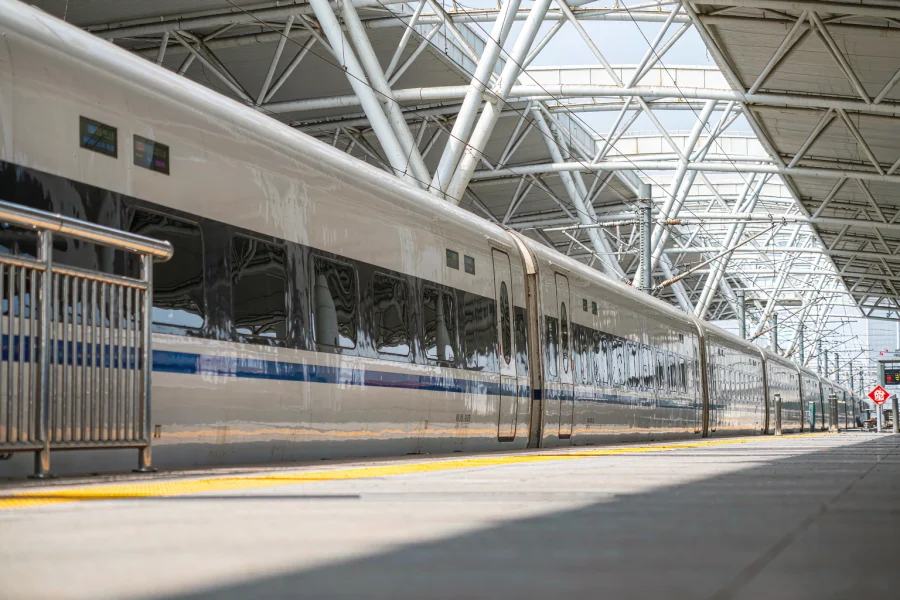
There is no check-in desk and no baggage drop. You carry everything on board and find a spot for it — which, for most travelers, is easier than flying.
How much you can bring
Each adult carries up to 20 kg free. On high-speed (EMU) trains each piece should be no more than 130 cm when you add length + width + height. A standard 24-inch case fits the overhead rack; bigger cases go in the rack at the end of the carriage.
Security is quick
Bags go through an X-ray at the entrance — usually a 2–10 minute line, faster than at the airport. You keep your shoes and laptop. Power banks are allowed (unlike on some flights).
Pro move: send the big bag
Hopping between cities? Courier services like SF Express deliver a suitcase hotel-to-hotel (often next-morning, ¥50–150). You travel with a day bag and skip the luggage shuffle entirely.
Routes first-timers actually use
Beijing ↔ Shanghai
The headline line. Multiple departures daily; often faster than flying once you count both airport transfers.
Beijing ↔ Xi’an
Trade the capital for the Terracotta Army and the city walls. A classic first-timer pairing. See our China city guides.
Shanghai ↔ Hangzhou
An easy day trip or an overnight stay by the lake. Trains leave constantly.
Guilin ↔ Yangshuo
Karst mountains out the window the whole way. Pair it with our China city guides.
Continue your planning
Four places to go next — pick the one you need right now.
Common questions
Almost never. Your passport is your boarding credential — the gate scans it directly at most high-speed stations. Keep the e-ticket on your phone as a backup.
A dining car sells snacks and hot meals on longer trains, and staff push a trolley through the carriages. Most people bring their own too — there’s hot-water dispensers for tea or instant noodles.
Plan 45–60 minutes for a high-speed station. They’re airport-sized, with a 10–15 minute walk from entrance to platform at the big ones. Gates close about 15 minutes before departure.
Ready to book your seats?
Our booking walkthrough covers 12306 and Trip.com line by line, plus the passport verification step that trips up most first-timers.
Practical first-trip China guides — visas, VPN, eSIM, Alipay, trains, and city routes.