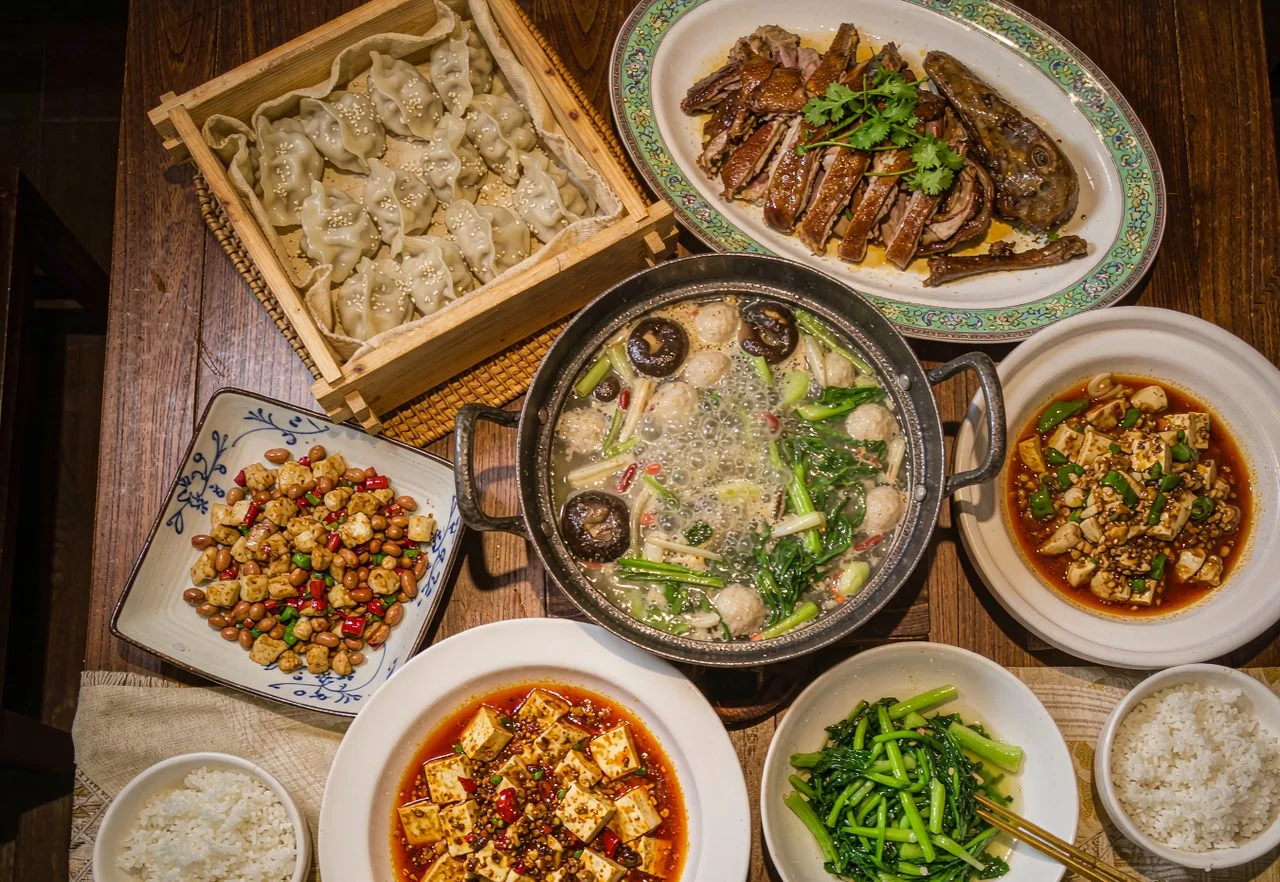
Chinese food is regional, shared and seasonal
The biggest surprise for first-timers: there is no single “Chinese food.” What people eat in snowy Harbin, humid Guangzhou and fiery Chengdu barely overlaps. Flavours follow geography — coastal regions lean on seafood, the north lives on wheat noodles and dumplings, the south on rice, and the west and southwest turn up the heat.
Two habits make eating in China different from the West. Meals are shared — you order a spread of dishes for the table, not one plate per person. And nearly everything is eaten with the seasons, so the same city tastes different in May than in November.
It changes by region
Nine recognised regional cuisines, each with its own signature dishes. Ordering in Chengdu is nothing like ordering in Guangzhou.
Dishes are shared
One veg, one protein, one soup, one staple for the table. You eat from the middle with your own chopsticks or a shared spoon.
Street food rules
Some of the best food is from a cart. Follow the longest local queue — high turnover means fresh, safe and popular.
The nine great regional cuisines
These are the styles most travellers actually meet. Each line names the home base, the flavour and two dishes worth trying.
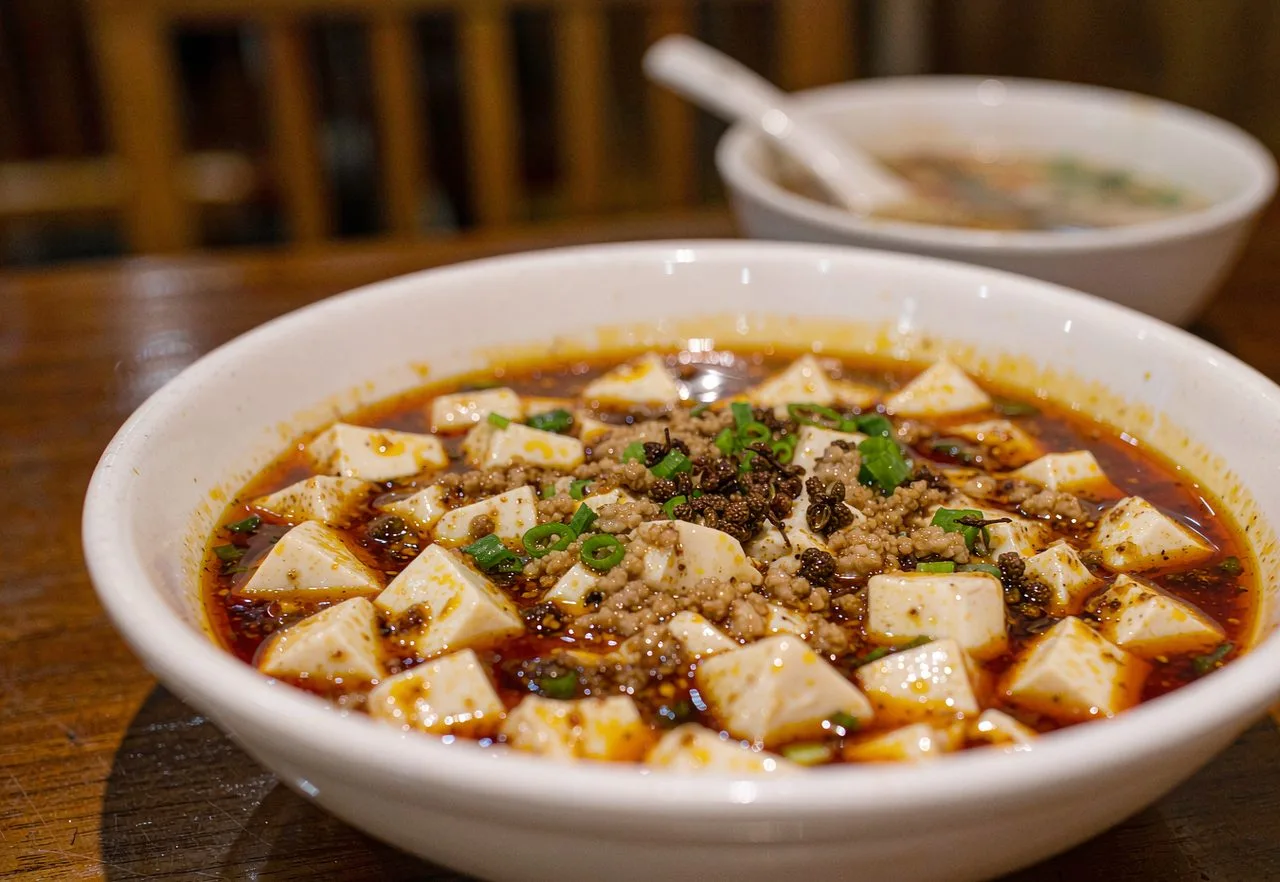
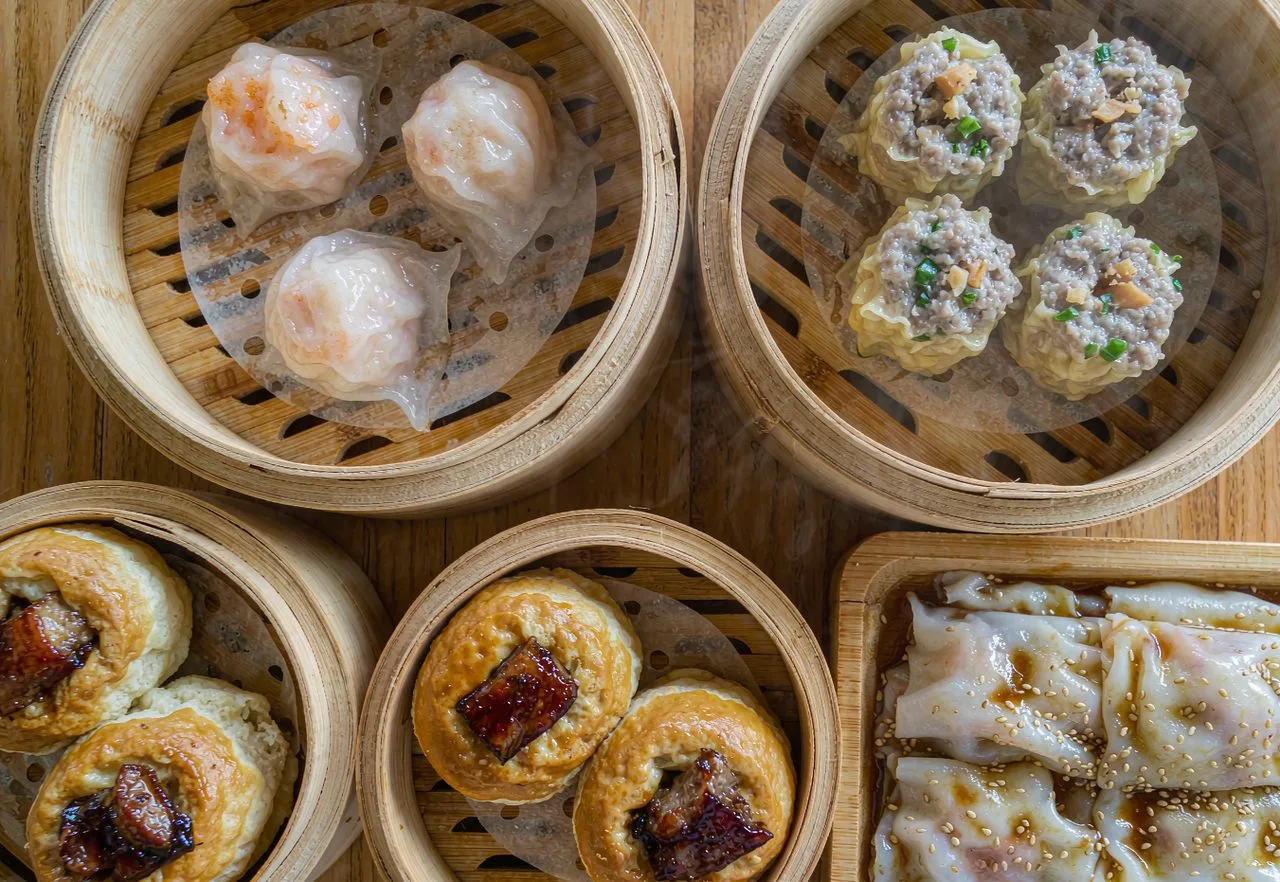
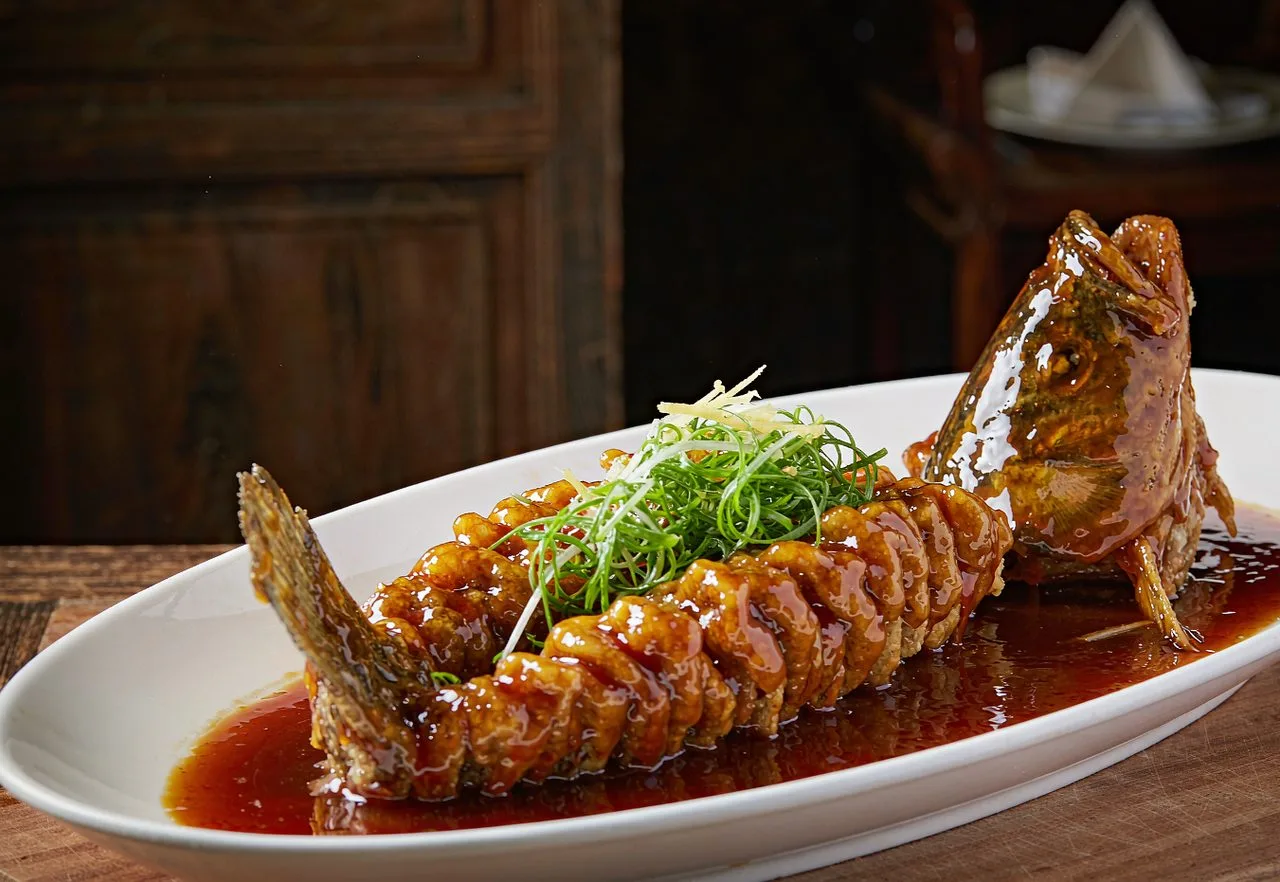
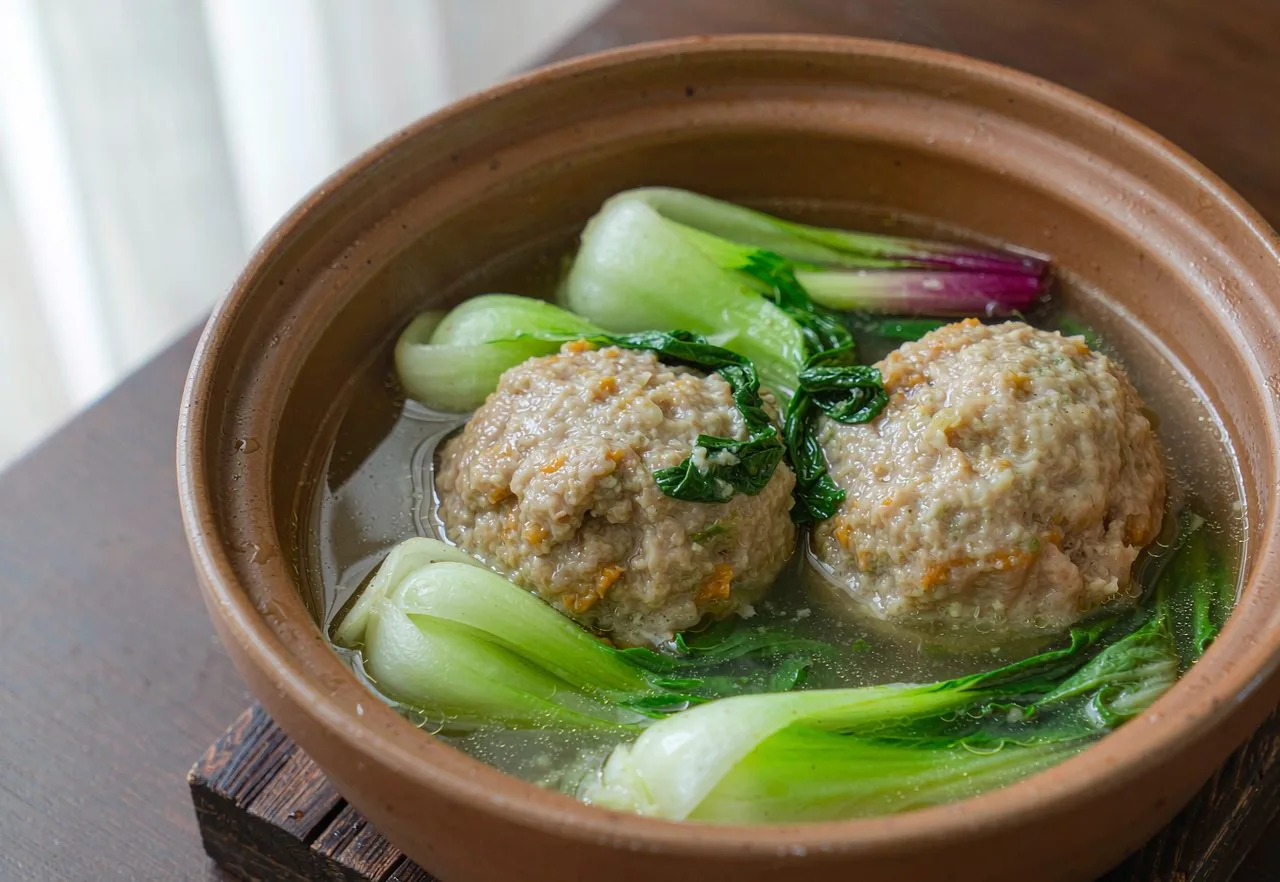
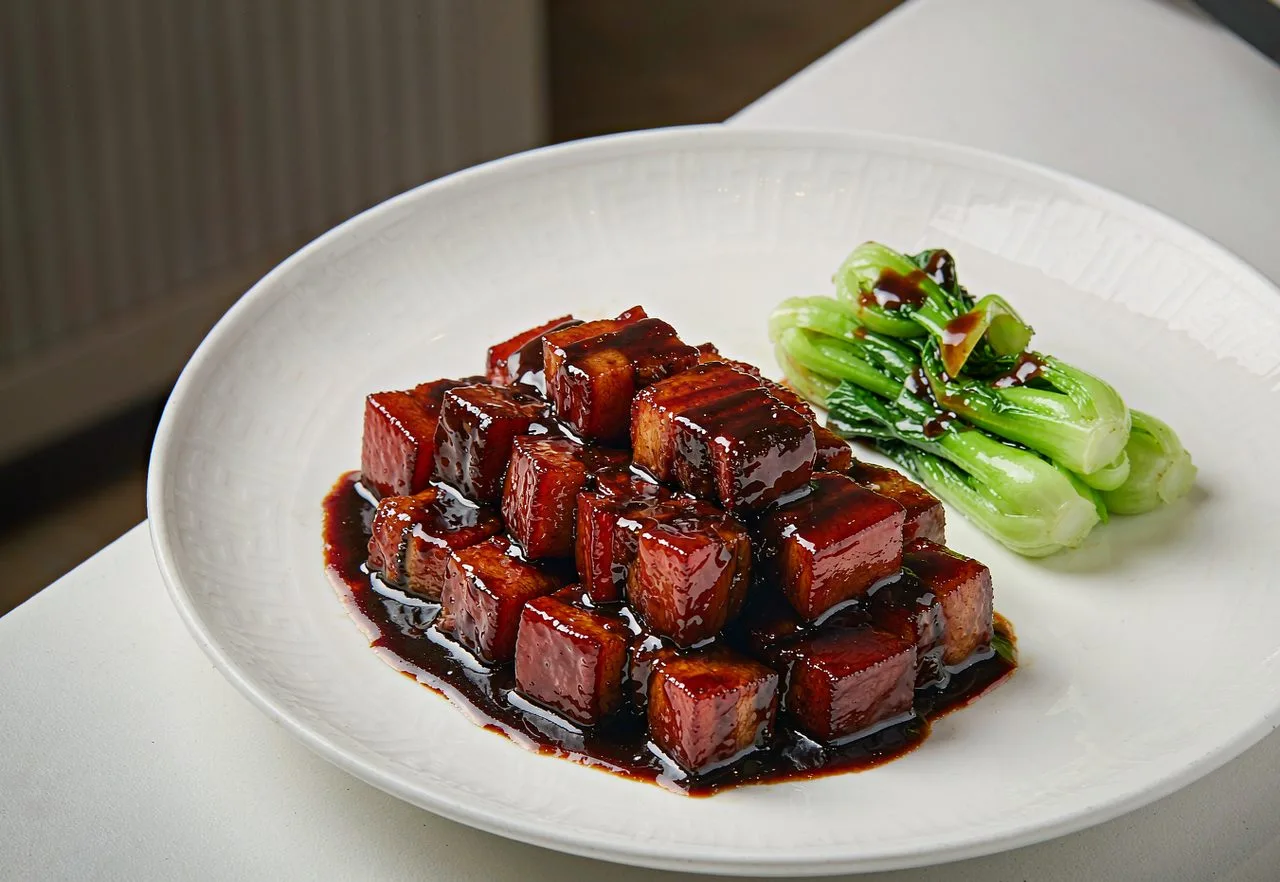
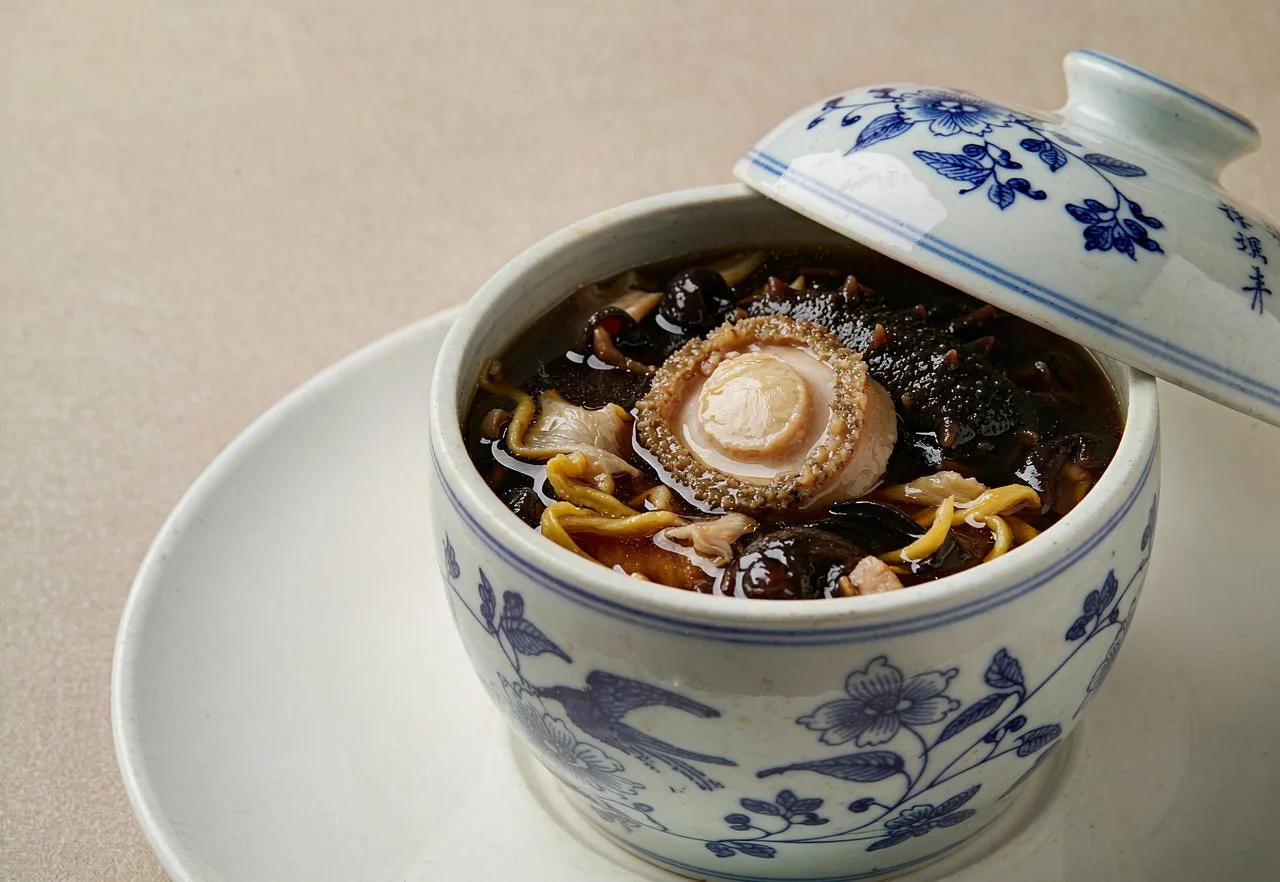
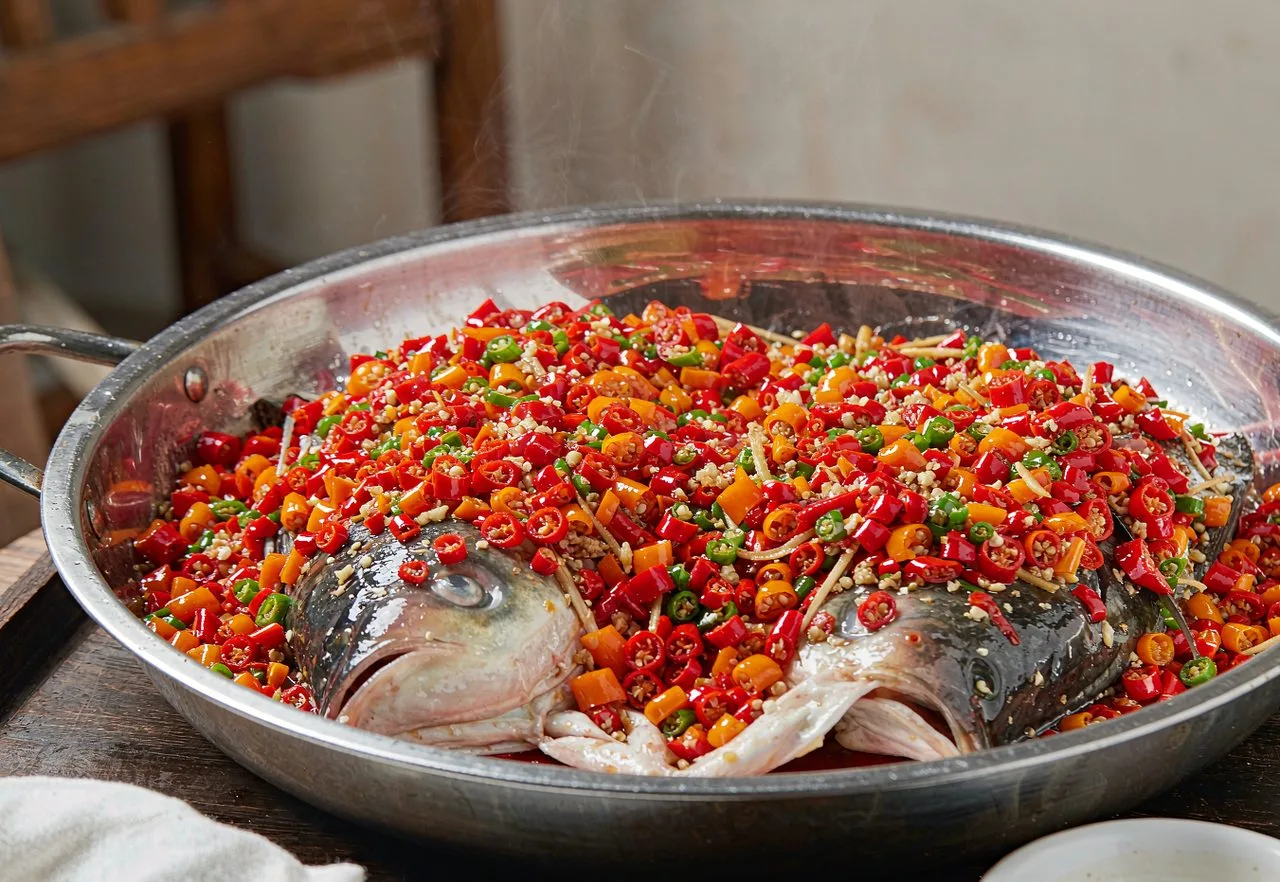
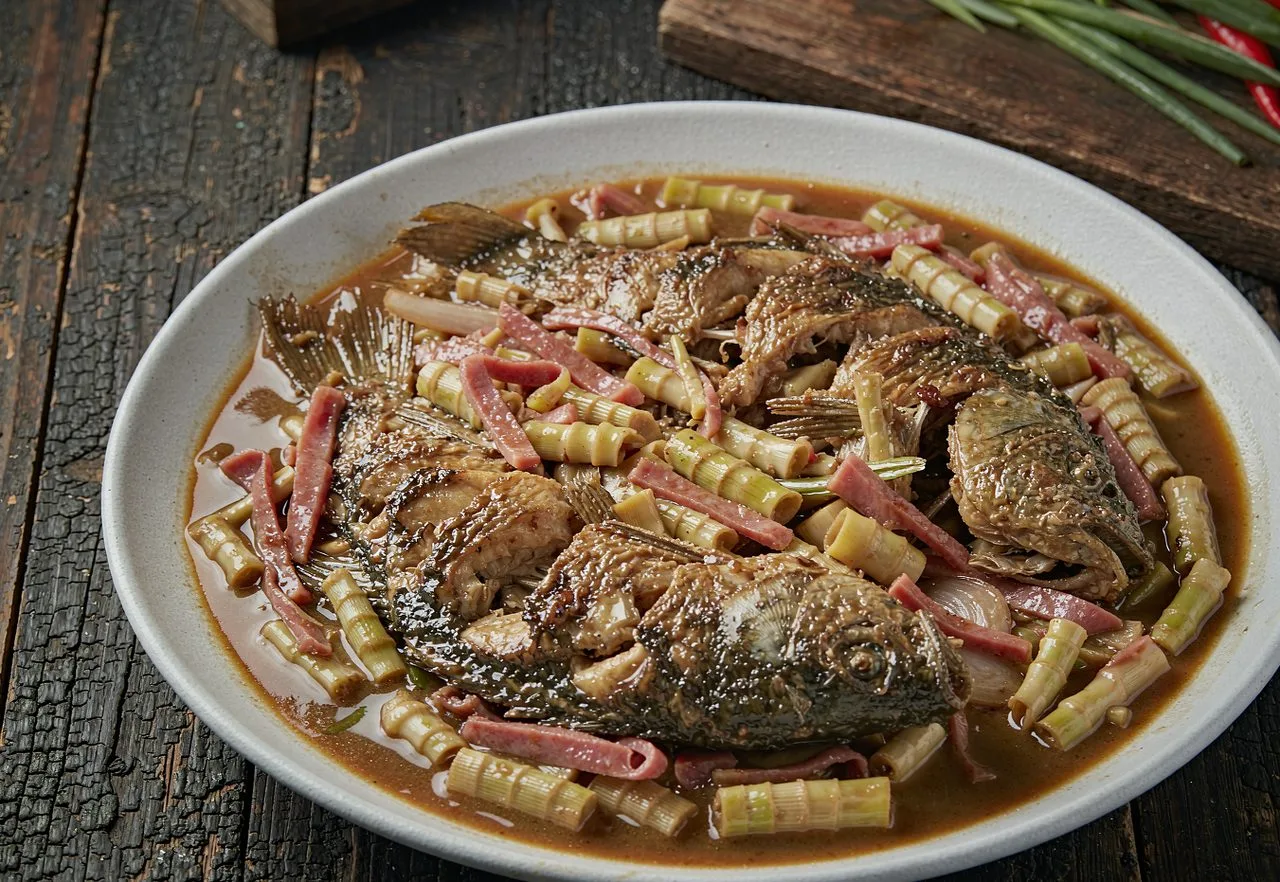
Signature dishes worth travelling for
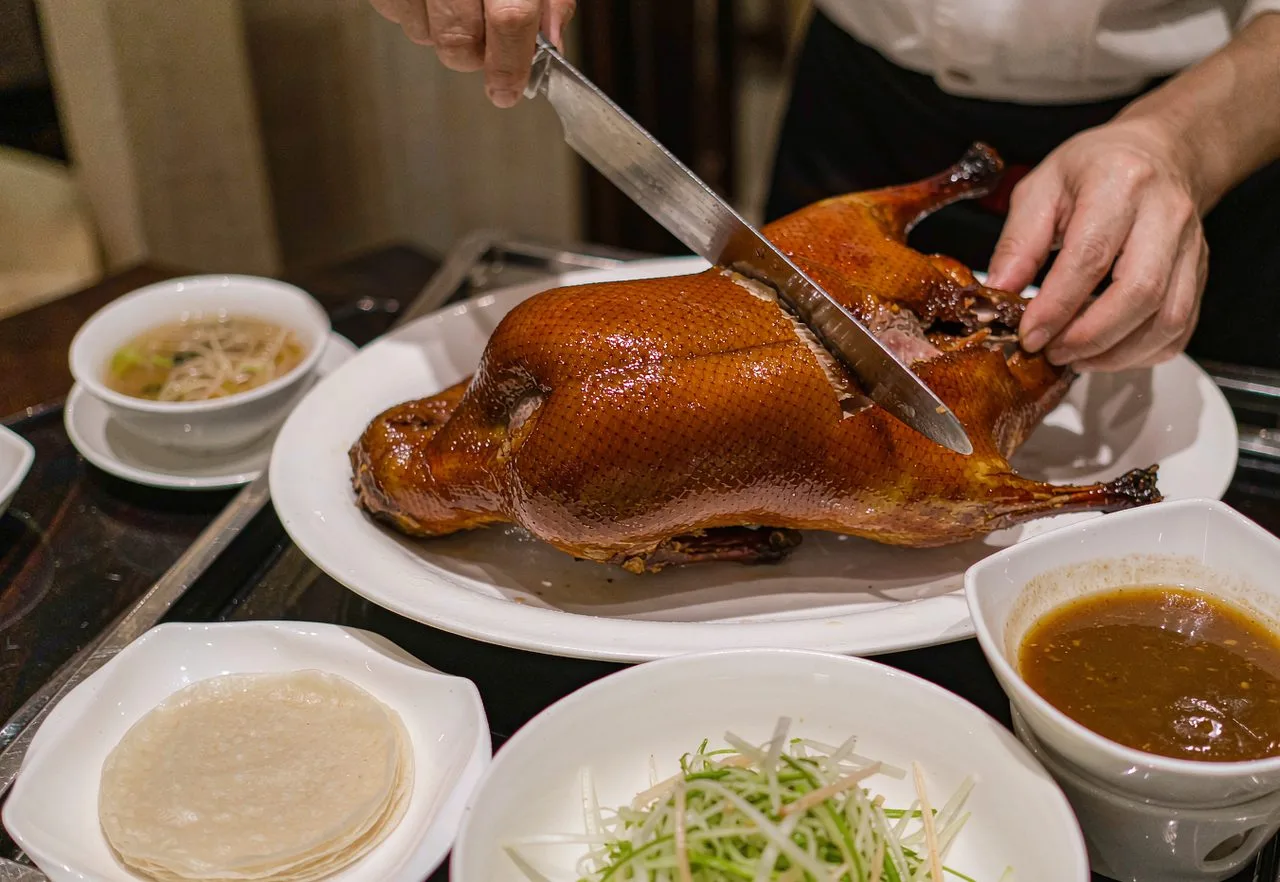
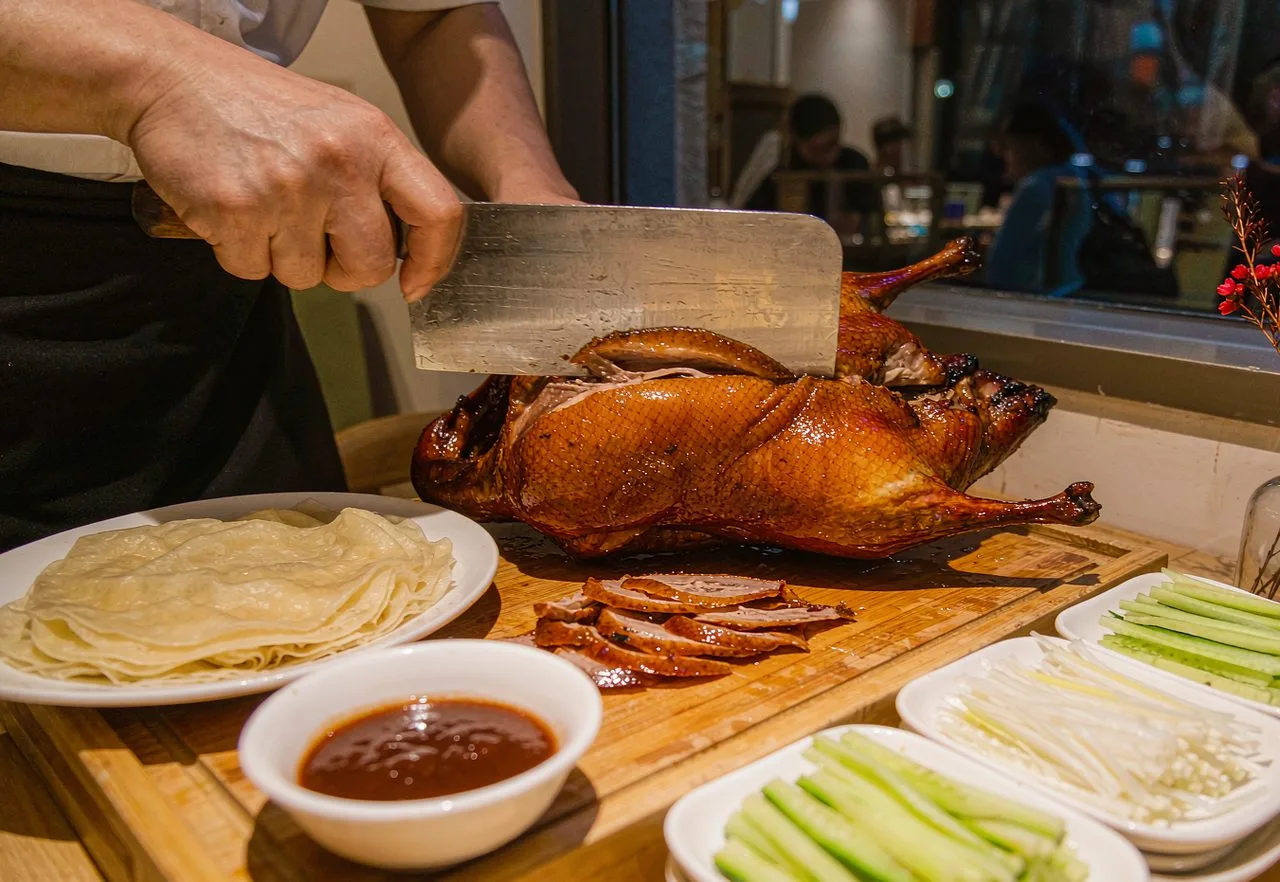
Peking duck
Beijing’s famous roast duck, carved at your table and wrapped in thin pancakes with sweet sauce, cucumber and scallion. A whole duck runs about RMB 200–350 at a mainstream restaurant — half is usually plenty for two. Book ahead; top spots sell out.
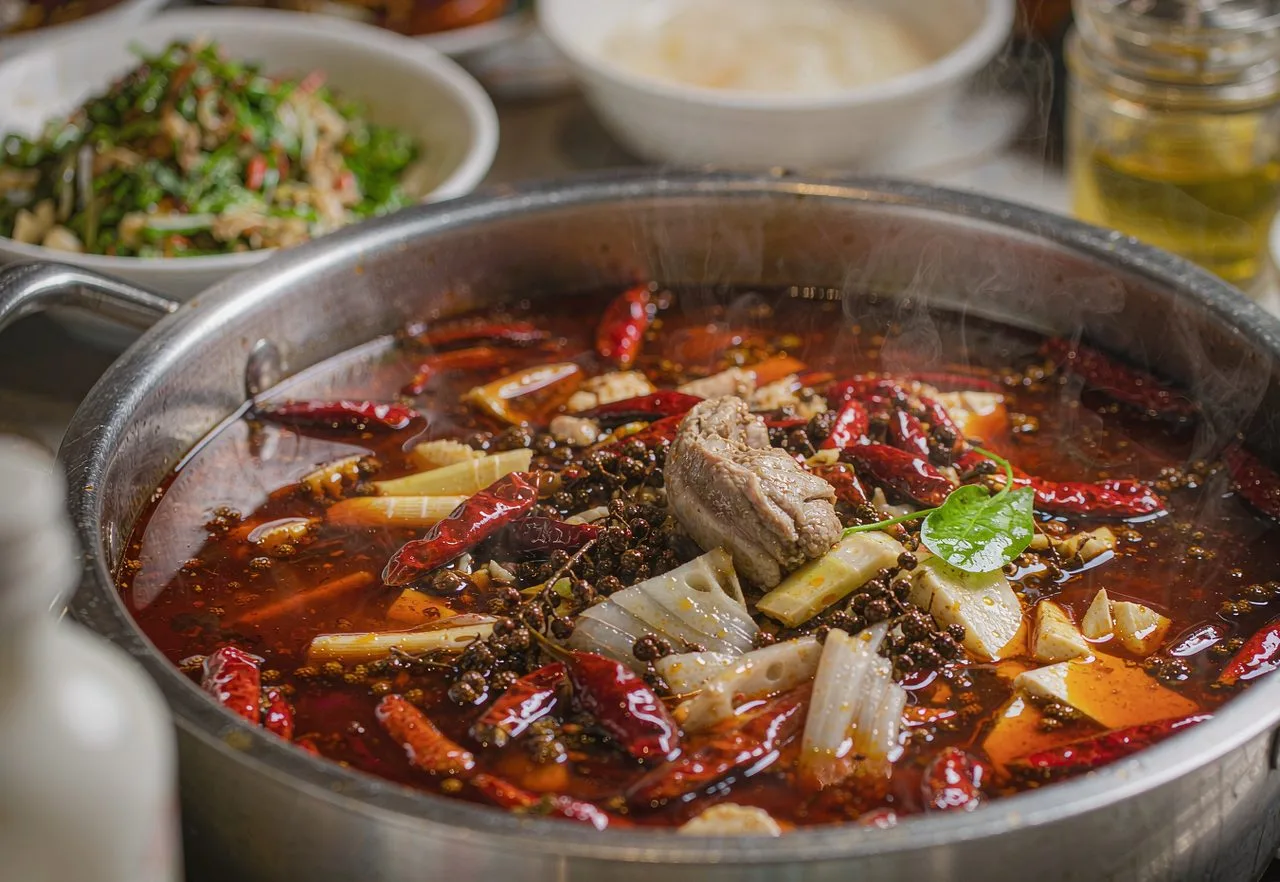
Hot pot
A social centrepiece, especially in Sichuan and Chongqing. You cook thin slices of meat, tofu and veg in a shared, often má là (numbing-spicy) broth at the table. Order a “yuán yáng” (split) pot if someone wants mild.
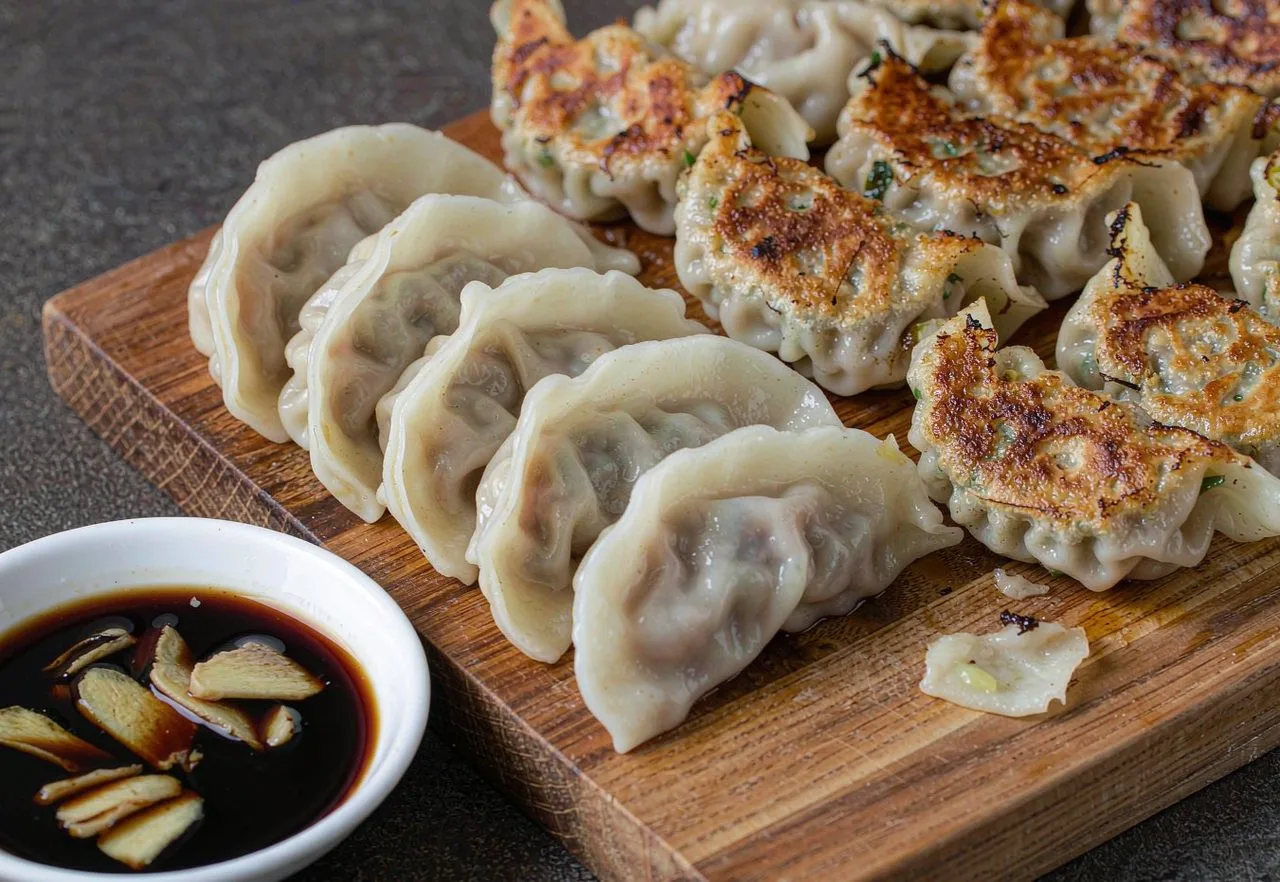
Dumplings (jiaozi)
A northern staple — boiled, steamed or pan-fried parcels of pork, veg or shrimp. Eaten year-round and essential at Chinese New Year. Dip in black vinegar with ginger.
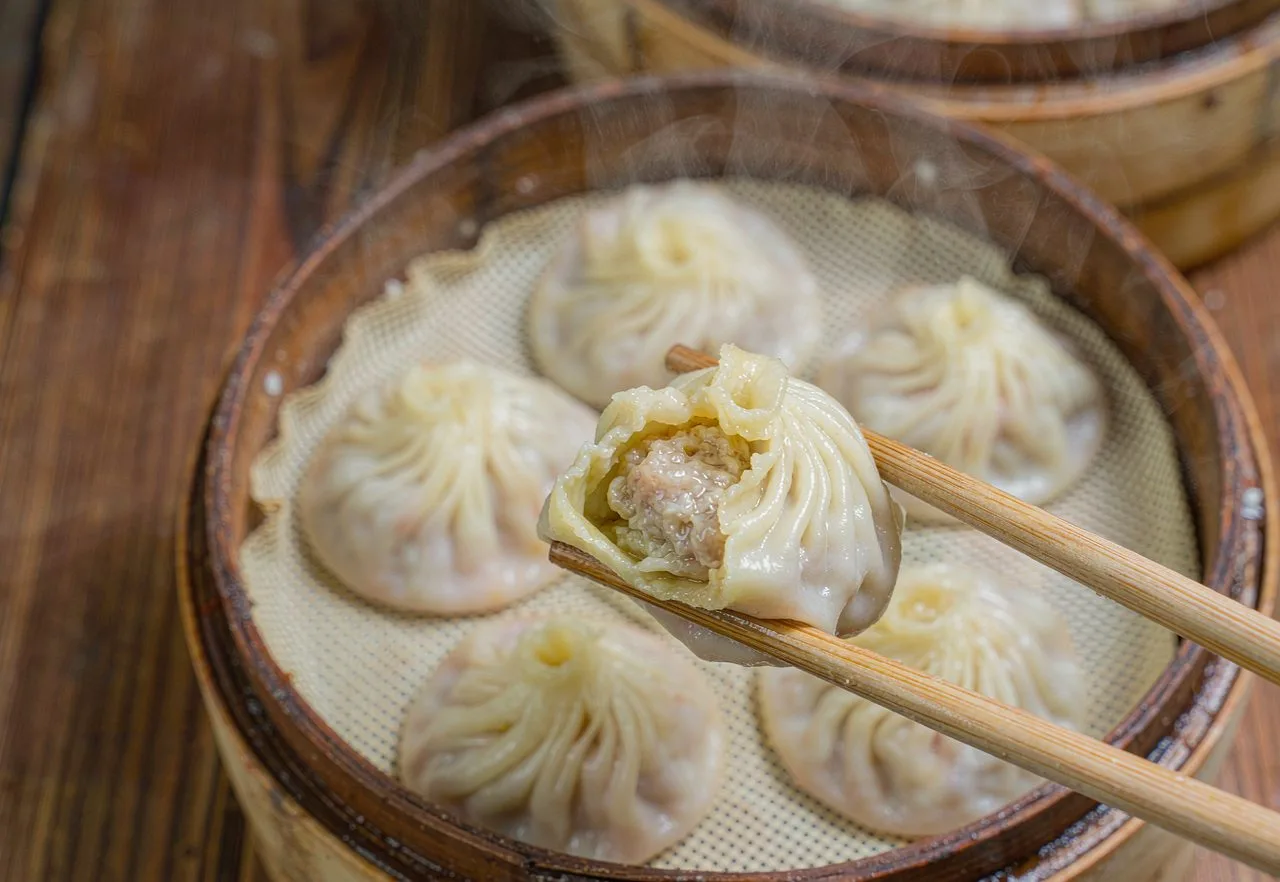
Xiaolongbao
Shanghai’s soup dumplings — delicate buns with hot broth inside. Lift with care, nibble the top, sip the soup, then eat. A cheap, unforgettable bite at any xiaolongbao shop.
Street food: what to try and what it costs
Street food is where China eats, and it’s gloriously cheap. Below are 2026 ballpark prices in RMB (about US$1–3 a bite). Prices climb near tourist sites and in big cities.
Typical 2026 prices
| Jianbing (savory crepe) | RMB 6–12 |
| Baozi (steamed bun) | RMB 1.5–3 each |
| Roujiamo (“Chinese burger”) | RMB 8–18 |
| Yangrou chuan (lamb skewer) | RMB 3–5 each |
| Tanghulu (candied hawthorn) | RMB 5–15 |
| Stinky tofu (small bowl) | about RMB 10 |
| Youtiao (fried dough) / tea egg | RMB 1.5–3 |
A filling street breakfast runs about RMB 5–15; eating from stalls all day, RMB 40–60 is plenty.
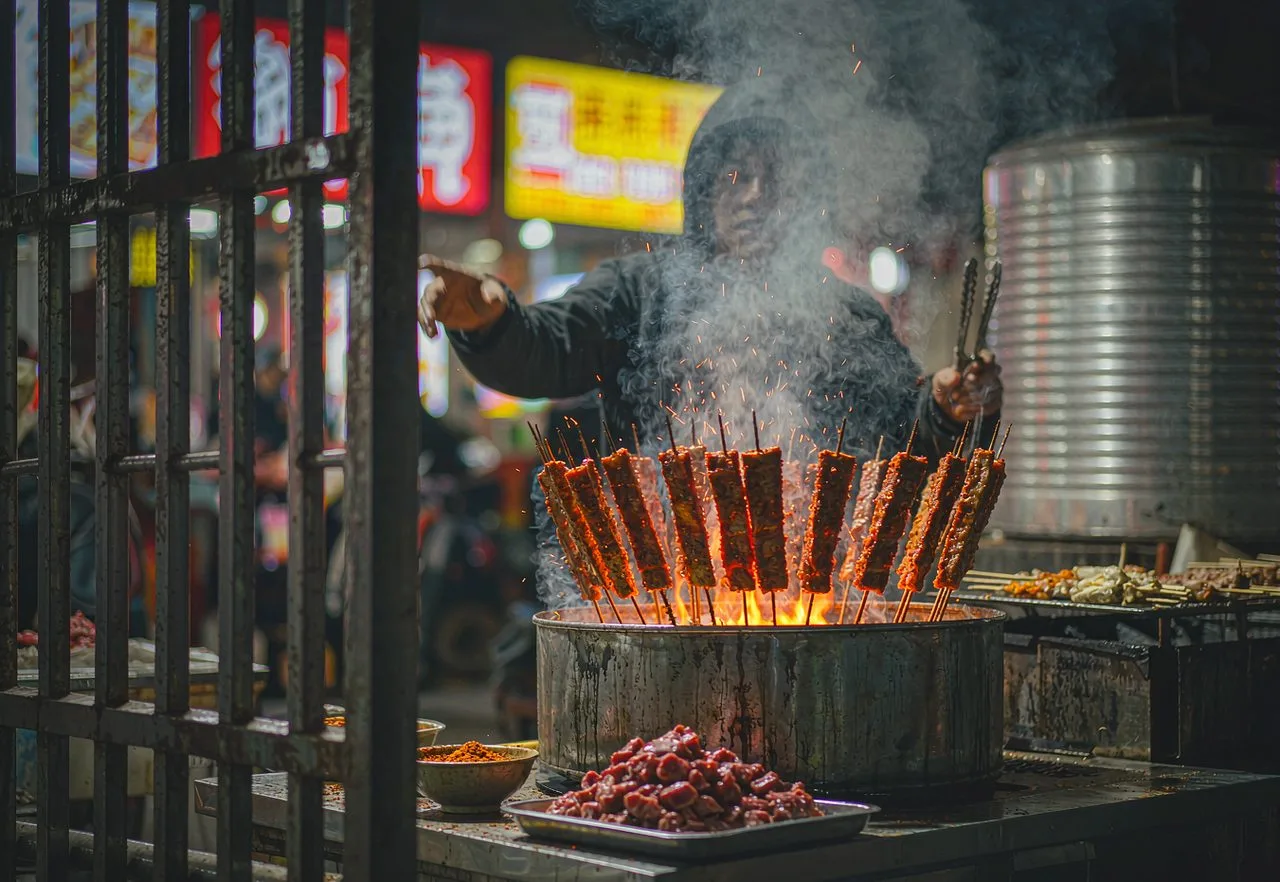
What to hunt for
Jianbing for breakfast, roujiamo in Xi’an, lamb skewers and stinky tofu at night markets, baozi anywhere. Follow the longest local queue — it’s the best freshness signal there is.
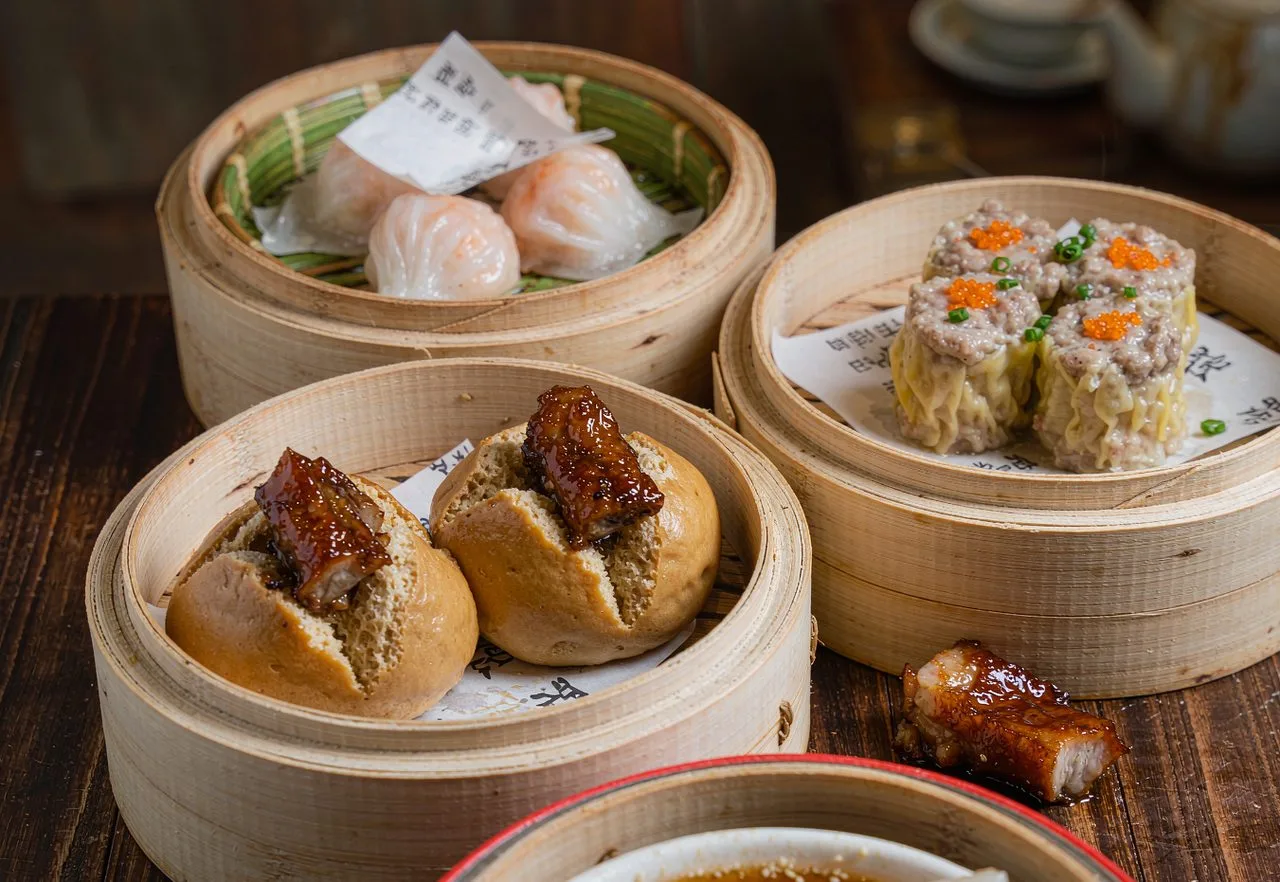
Dim sum
Cantonese brunch of small steamed baskets — shrimp dumplings, siu mai, char siu buns, rice rolls. Go with friends so you can try more. Best in Guangzhou and Hong Kong.
How to order without speaking Chinese
You don’t need the language — you need a translation app, a finger and a few phrases. Most menus have photos, and many restaurants use QR-code ordering you can translate on screen.
Handy phrases
- Zhè ge (这个) — “this one” (point as you say it)
- Duō shǎo qián? (多少钱) — “how much?”
- Bù yào là (不要辣) — “no chilli”
- Wēi là (微辣) — “mildly spicy”
- Yí gè / liǎng gè — “one / two”
A simple formula
Order one vegetable, one protein and one staple (rice or noodles) per two people, then add more if hungry. Point at what a neighbouring table is enjoying.
Eating alone? Noodle shops, dumpling houses and set meals are the easiest. Many apps like Meituan and Dianping show photos and reviews you can translate.
Etiquette and what not to do
Sharing & seating
Dishes land in the middle for everyone. The oldest or guest of honour often sits facing the door. Rice is served to you or shared, not plated individually.
Chopsticks
Don’t stick them upright in a bowl of rice (it resembles funeral incense), and don’t point with them. Rest them on the bowl’s edge or a chopstick rest.
Tipping & toasting
There’s no tipping in China — it can even confuse staff. At a drink, a “gān bēi” (cheers) and eye contact goes a long way.
Budget and how to pay
Eating well in China is cheap. A local restaurant meal is about RMB 40–80 per person; a mid-range dinner with a few dishes runs RMB 100–150. Street food keeps it lower still.
Pay with your phone
Set up Alipay and WeChat Pay before you fly and link a foreign card. They cover most restaurants, stalls and even trains; keep some RMB cash for tiny vendors.
Tea & drinks
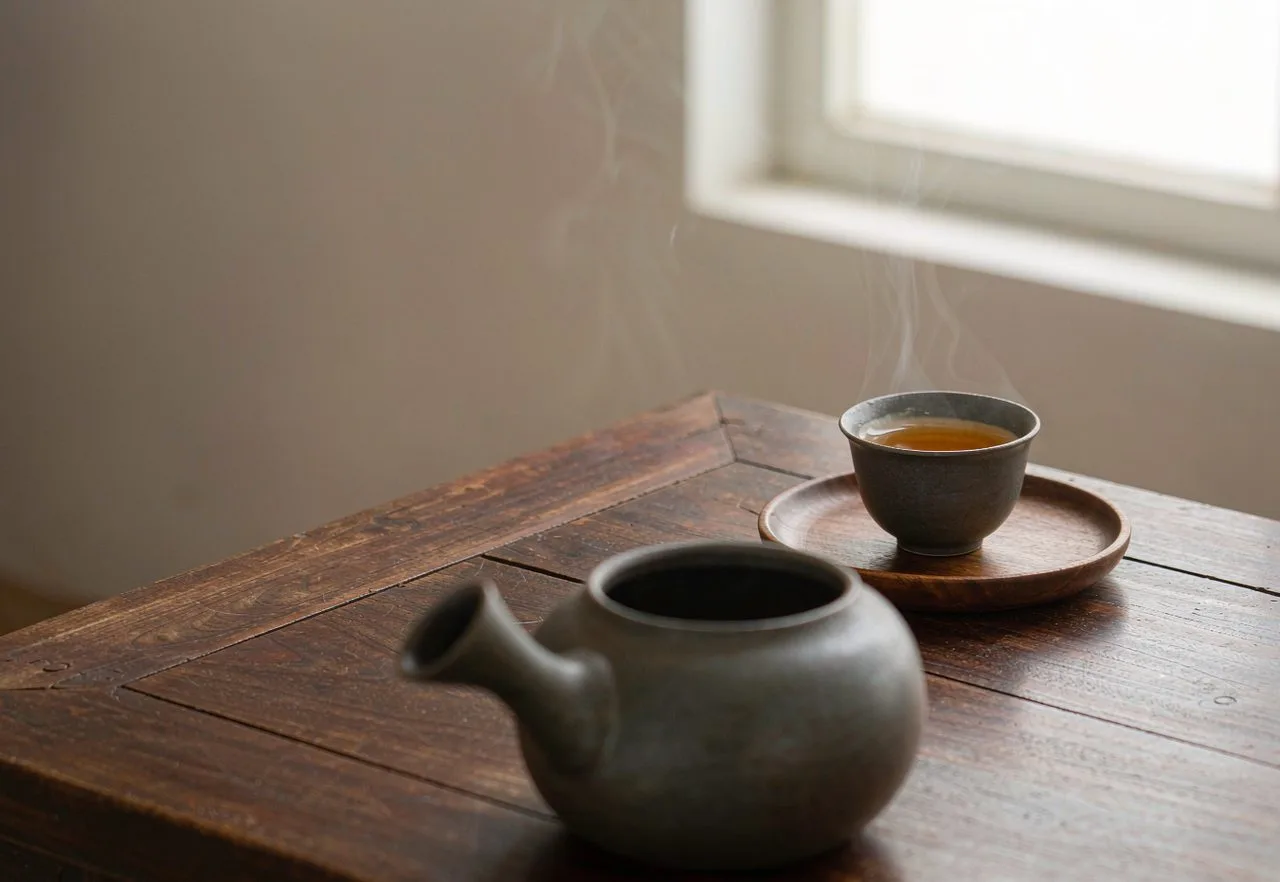
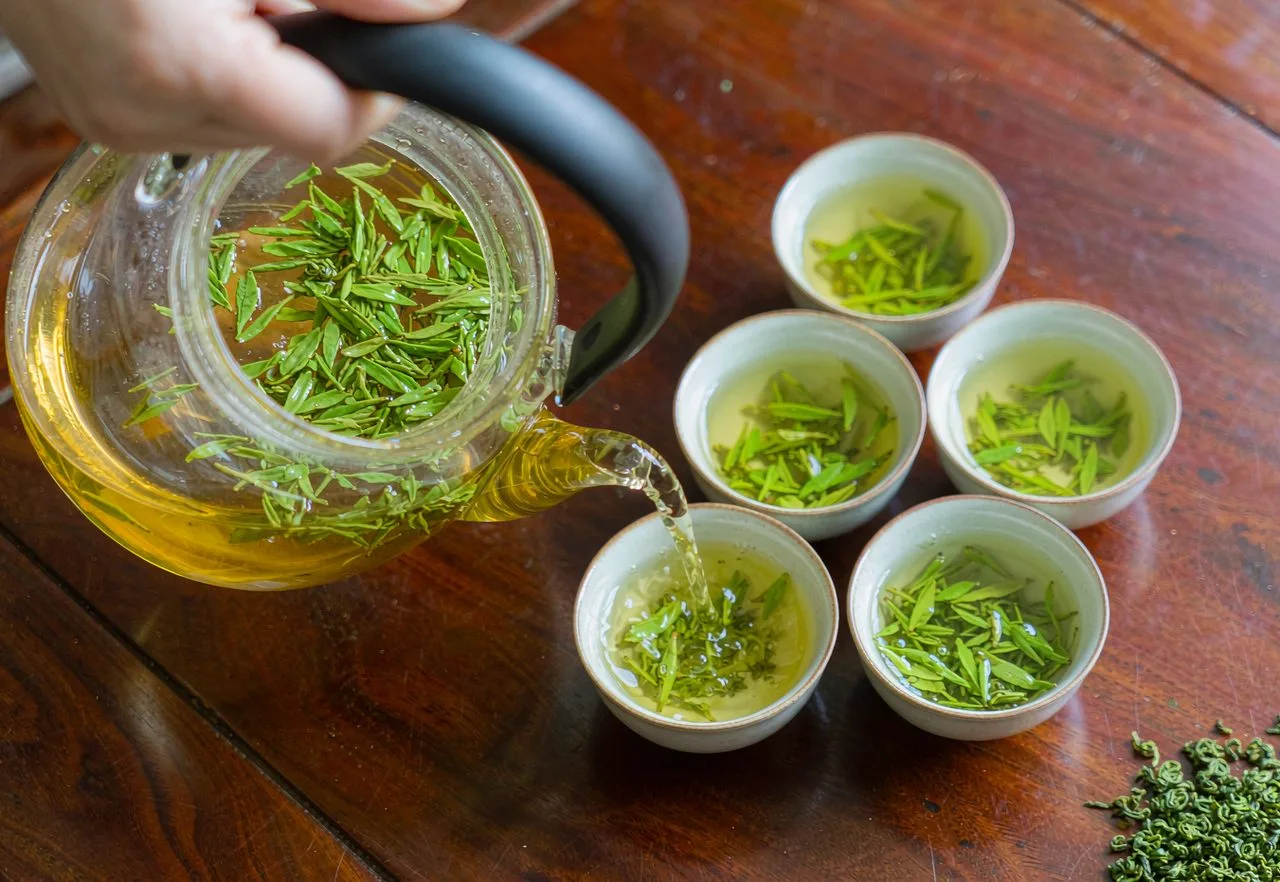
Tea is the default table drink — green (Longjing), oolong and pu’er are common, often free or cheap. Beer (Tsingtao) is widely available; baijiu (strong liquor) is an acquired taste best met in small toasts.
Best cities for food travellers
Chengdu & Chongqing
The heart of Sichuan — hot pot, mapo tofu and numbingly good noodles. Chengdu also has the pandas.
Guangzhou & Hong Kong
Cantonese ground zero. Dim sum, roast goose and the cleanest seafood. Some of the best breakfasts on earth.
Xi’an
Wheat country: hand-pulled noodles, roujiamo and the Muslim Quarter’s lamb-and-skewer night scene.
Shanghai
A sampler city — xiaolongbao, and branches of regional cuisines from across the country in one metro.
Hangzhou
Lighter eastern flavours and a slow, scenic tea culture — ideal for a relaxed food day by the lake.
Dietary notes
Vegetarian
Possible, but watch for hidden pork and animal fat in stocks, dumpling fillings and sauces. Say “wǒ chī sù” (我吃素). Buddhist sùshí restaurants are the safest bet.
Halal
Look for halal restaurants (清真, qīngzhēn) in Xi’an, Lanzhou, Ningxia and Xinjiang. Elsewhere, pork and lard are common, so ask before ordering.
Allergies & spice
Carry your allergy in writing or in a translation app. Bù yào là means no spice; wēi là means mild. Sichuan peppercorn numbness is separate.
Eating mild
Start in Cantonese, Shanghainese or Hangzhou restaurants. Order wēi là in Sichuan and Hunan, then dial the heat up as you go.
Gluten-free
Rice is safe, but wheat noodles, dumpling wrappers, steamed buns and most soy sauce contain gluten. Ask for dishes served with plain rice.
First-timer tip: start mild. Sichuan and Hunan are genuinely hot — ordering “wēi là” lets you enjoy the flavour without the fire, then dial up as you go.
FAQ
What is the typical Chinese food a first-timer should try?
Start with the icons: Peking duck in Beijing, Sichuan hot pot and mapo tofu, Shanghai soup dumplings (xiaolongbao), Cantonese dim sum, and northern dumplings (jiaozi). Add street snacks like jianbing and roujiamo.
How much does food cost in China in 2026?
Street food is about RMB 6–18 a bite and a filling breakfast runs RMB 5–15. A local restaurant meal is roughly RMB 40–80 per person; a nicer shared dinner is RMB 100–150. A whole Peking duck is about RMB 200–350.
Can I eat in China if I don’t speak Chinese?
Easily. Most menus have photos, many places use translatable QR-code ordering, and a translation app plus pointing covers the rest. Phrases like “zhè ge” (this one) and “bù yào là” (no chilli) go a long way.
Is Chinese street food safe to eat?
Generally yes. Choose busy stalls with high turnover (long local queues mean fresh food), prefer cooked-to-order over pre-prepared, and you’ll be fine. Carry hand sanitiser; not every stall has a sink.
Is China vegetarian-friendly?
Vegetables are everywhere, but hidden pork and animal fat are common in stocks and sauces. Say “wǒ chī sù” (I eat vegetarian) and look for Buddhist vegetarian (sùshí) restaurants for reliable meat-free meals.
Do you tip in Chinese restaurants?
No. Tipping isn’t expected or customary in China and can confuse staff. Just pay the bill (usually by scanning a QR code with Alipay or WeChat Pay).
Explore more China guides
Continue your planning
Four places to go next — pick the one you need right now.
Practical first-trip China guides — visas, VPN, eSIM, Alipay, trains, and city routes.