
What to actually prioritize
Most first-timers can see Guilin and Yangshuo in three days. These six stops are the reason the region is on every China bucket list.
Li River Cruise
The one-way cruise from Guilin to Yangshuo covers about 83 km (52 miles) and takes 4–5 hours. It passes the karst scenery printed on China’s 20 RMB banknote. Book with your passport; the 4-star cruise from Zhujiang Pier is the most popular choice for foreign visitors.

Yangshuo & Yulong River
Most travelers stay in Yangshuo after the cruise. Rent an e-bike or bicycle to explore the Yulong River, West Street and karst backroads. Bamboo rafting on the Yulong River is calmer and more intimate than the big Li River boats.
Longji Rice Terraces
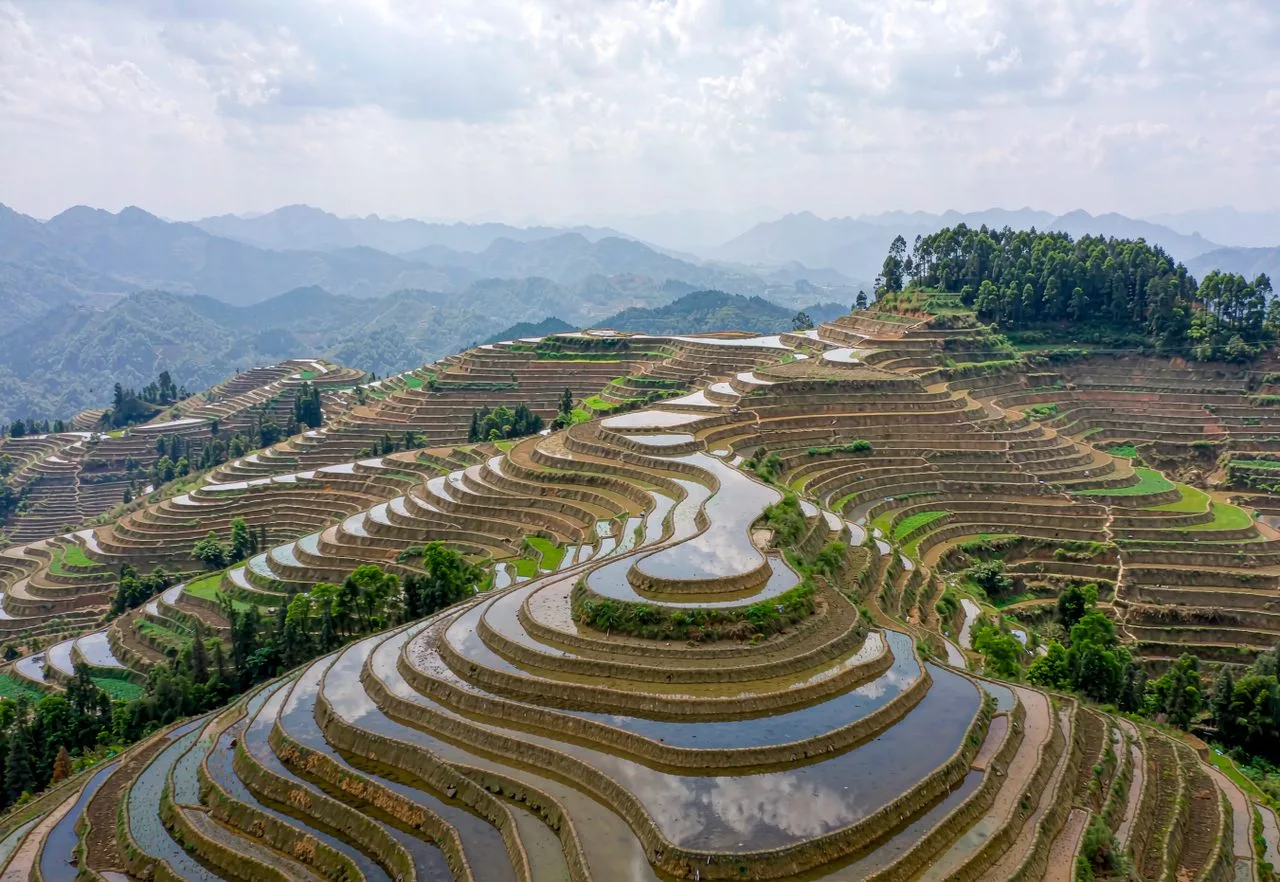
About 80–100 km north of Guilin, these terraces climb the mountain in steps. The water-filled fields in May–June and golden harvest in September–October are the most photogenic. Main areas: Ping’an (Zhuang) and Dazhai/Jinkeng (Yao).
Elephant Trunk Hill
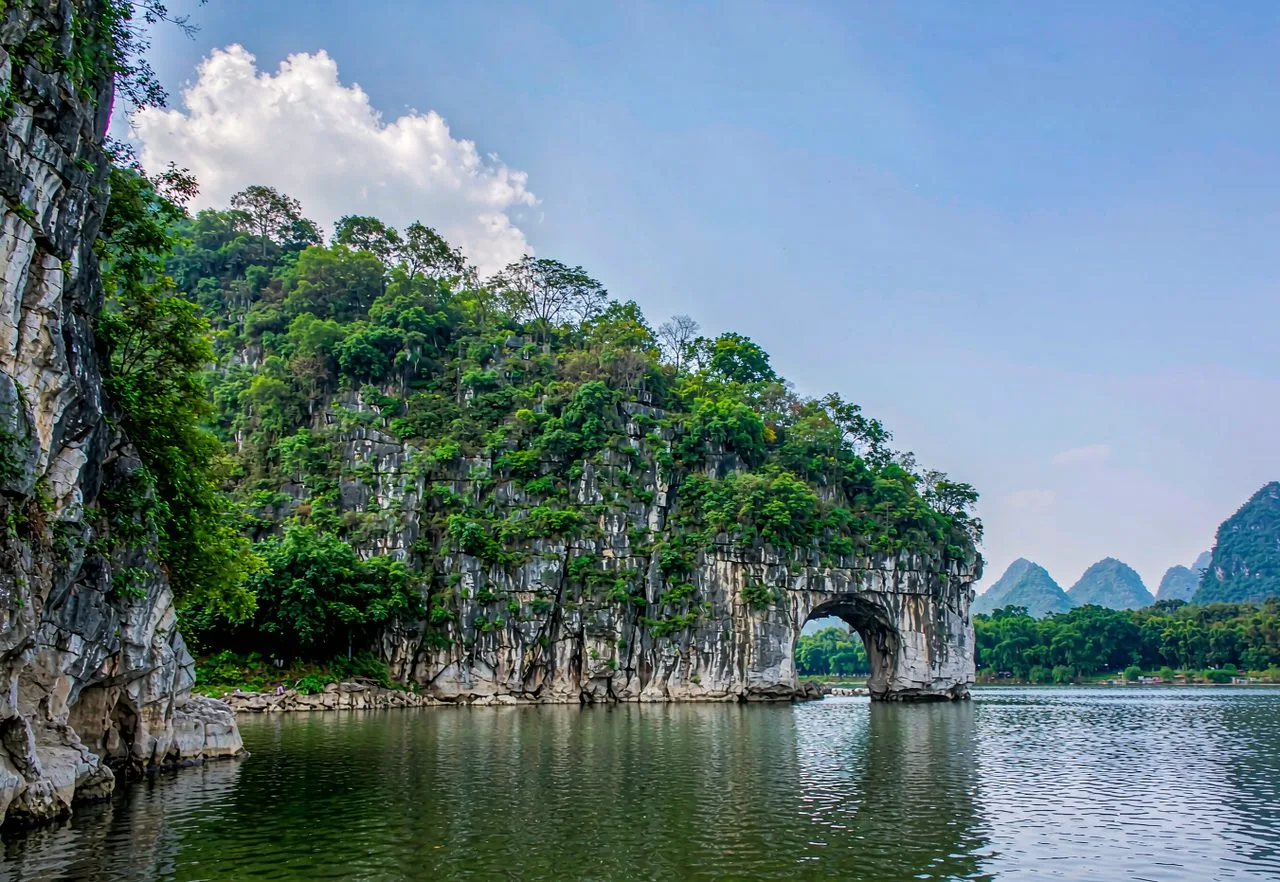
The symbol of Guilin: a limestone hill that looks like an elephant dipping its trunk into the Li River. It sits at the confluence of the Li and Taohua rivers near downtown, making it easy to fit into a morning before the cruise.

Reed Flute Cave
A 240-meter walk through a limestone cave with colored lights on stalactites and stalagmites. It is about 5 km northwest of the city center and takes 45–60 minutes.

Xingping & the 20 RMB View
The view on the back of China’s 20 RMB note was photographed near Xingping, a small ancient town along the Li River. It is a popular half-day add-on from Yangshuo.
A relaxed 3-day Guilin & Yangshuo itinerary
This itinerary assumes you start in Guilin city, take the one-way Li River cruise to Yangshuo, and day-trip to the Longji Rice Terraces before leaving.
Day 1: Guilin city & Li River cruise
- Morning: Quick visit to Elephant Trunk Hill or Reed Flute Cave.
- Mid-morning: Board the Li River cruise at Zhujiang Pier (departures around 9:00–10:30).
- Afternoon: Arrive in Yangshuo; check in and walk West Street.
- Evening: Yangshuo beer fish dinner.
Day 2: Yangshuo countryside
- Morning: Bamboo rafting on the Yulong River.
- Late morning: Rent an e-bike or bicycle through rice fields and karst villages.
- Afternoon: Moon Hill, Big Banyan Tree, or rock climbing.
- Evening: Watch Impression Liu Sanjie on the Li River or explore West Street.
Day 3: Longji Rice Terraces
- Full-day trip from Guilin or Yangshuo (about 2–2.5 hours by road).
- Morning: Hike the viewpoint trails at Ping’an or Dazhai.
- Lunch: Bamboo-tube rice or local dishes in a village restaurant.
- Evening: Return to Guilin for your train or flight out.
What to eat in Guilin & Yangshuo
Guilin’s food is lighter and more rice-based than the spicy cuisines of Chengdu or Chongqing. The region is famous for rice noodles, river fish and osmanthus.
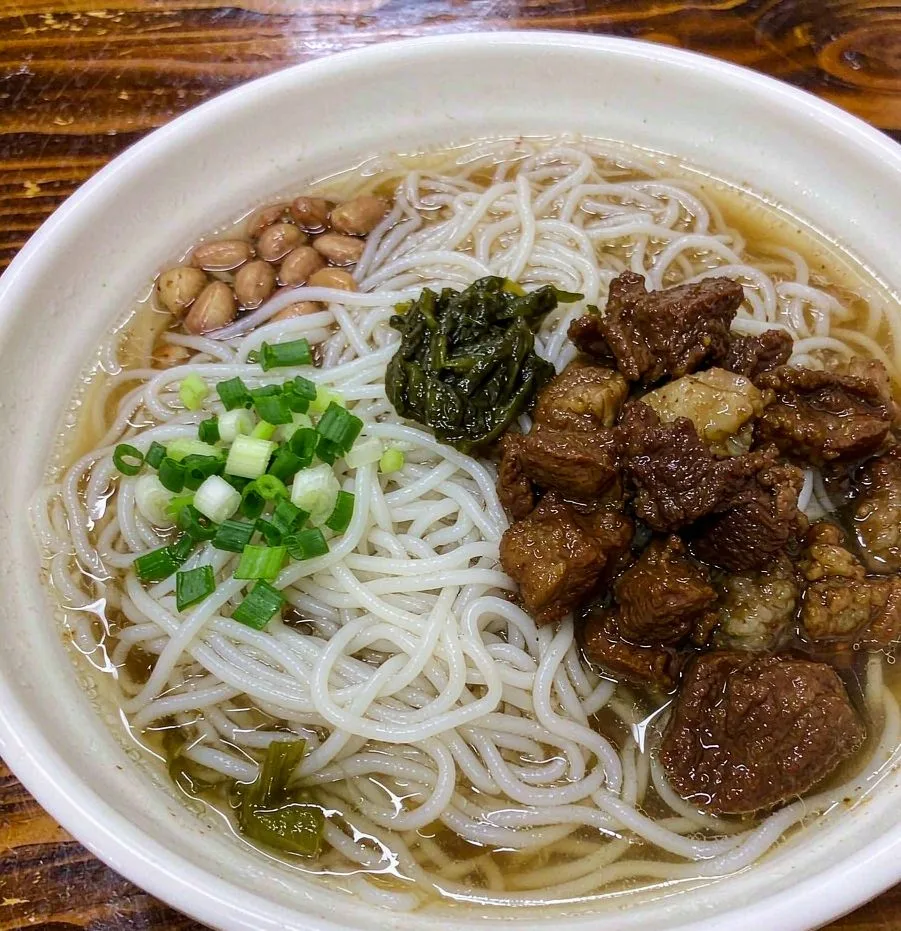
- Guilin rice noodles (mixian) — the city’s signature breakfast: white rice noodles in broth with braised pork, peanuts and pickles.
- Yangshuo beer fish (pijiu yu) — Li River fish braised in beer with peppers and tomatoes; the town’s most famous dish.
- Lipu taro (Lipu yutou) — a starchy local taro used in savory dishes and desserts.
- Stuffed dishes (niang) — stuffed snails, tofu, peppers and eggplant, popular at local restaurants.
- Osmanthus treats — Guilin is famous for osmanthus flowers; try osmanthus cake, tea or sweet wine.
Breakfast at a noodle shop and dinner on West Street will cover the essentials without overthinking it.
Best time to visit Guilin & Yangshuo
Guilin’s subtropical climate means hot summers and cool winters. The scenery changes with the season, but spring and autumn are the most reliable.
April – May
Mild temperatures and misty mornings give the karst peaks that classic ink-painting look. The Li River is at its most atmospheric.
September – October
Dry skies, comfortable days and golden rice terraces at Longji. Avoid the National Day holiday week (Oct 1–7).
June – August
Hot, humid and lush green. Afternoon thunderstorms can create dramatic mist but also disrupt outdoor plans.
November – March
Cool and quiet. Water levels on the Li River can be lower, and some sections may run a shorter route.
How to get to Guilin and get around
Guilin is well connected by air and high-speed rail, and the region is compact enough that most first-timers move between Guilin, Yangshuo and Longji in a single trip.
- By air: Guilin Liangjiang International Airport (KWL) is about 28 km southwest of downtown. The airport bus takes about 60 minutes and costs around RMB 20; a taxi is 40–50 minutes and about RMB 70–100.
- By high-speed rail: Guilin North is the main HSR hub. Guangzhou is 2–3 hours (about RMB 150–240 second class), Shenzhen 3–4 hours, Chengdu about 6 hours. See our China transport guide for booking tips.
- Guilin to Yangshuo: Take the one-way Li River cruise, a bus (about 1.5 hours), or the high-speed train to Yangshuo station (22–25 minutes) followed by a bus or taxi to town.
- Guilin to Longji: Direct tourist buses take about 2.5–3 hours. A private car or day tour is faster and easier if you don’t read Chinese.
- Getting around: DiDi, taxis and public buses work well in Guilin and Yangshuo. Shared e-bikes are common. Always keep destination names in Chinese characters.
Where to stay in Guilin & Yangshuo
Guilin city center
Near Elephant Trunk Hill and the Ronghu/Shanhu lakes. Best for the night before the Li River cruise and for city sights.
Yangshuo West Street
Lively area with restaurants, cafés and bars. Convenient for booking countryside activities and evening entertainment.
Yangshuo countryside
Boutique hotels and guesthouses near the Yulong River. Quieter, closer to nature, and the best views of the karst.
Guilin & Yangshuo travel budget
Costs below are per person per day in RMB and assume local transport, meals and one paid activity.
Budget
RMB 250–400
Hostel/dorm, noodle shops, public bus, one sight.
Mid-range
RMB 600–1,000
3-star hotel, local restaurants, DiDi, Li River cruise, two sights.
Upscale
RMB 1,300+
Boutique hotel in Yangshuo, private car/guide, premium cruise.
Practical tips for Guilin & Yangshuo
- Book Li River cruise tickets in advance. Passport is required for booking and boarding (real-name tickets).
- The cruise is one-way only. It ends in Yangshuo; there is no return boat on the same day.
- Confirm your pier the night before. Zhujiang Pier serves 4-star and 5-star cruises; Mopanshan Wharf serves 3-star cruises.
- Carry passport copies and Chinese addresses. Train tickets and some attractions require the passport you booked with.
- Use Alipay or WeChat Pay. Cash is rarely needed; set up and link a card before you arrive.
- Install a VPN before entering China. Google Maps is unreliable here; Amap or Baidu Maps work better if you can read Chinese addresses.
- For Longji, a private car or day tour is much easier than public buses if you do not read Chinese.
Frequently asked questions
How many days do I need in Guilin and Yangshuo?
Three days is the sweet spot: one day for Guilin city plus the Li River cruise, one full day in Yangshuo, and one day for the Longji Rice Terraces.
Is Guilin worth visiting for first-timers to China?
Yes. The karst landscape is unique, the city is manageable, and the Li River cruise is one of China’s most recognizable travel experiences.
Can I visit the Li River without a tour?
The cruise itself requires a ticket, which you can book online, through hotels or at travel agencies, then travel to the pier independently. Shorter bamboo-raft sections near Xingping can also be booked locally.
What is the best area to stay in Guilin or Yangshuo?
In Guilin, stay near the city center for the cruise departure and city sights. In Yangshuo, West Street is convenient; the countryside near the Yulong River is quieter and more scenic.
How far are the Longji Rice Terraces from Guilin?
About 80–100 km north of Guilin. The drive takes roughly 2–2.5 hours; direct tourist buses take about 2.5–3 hours.
Explore more China guides
Practical first-trip China guides — visas, VPN, eSIM, Alipay, trains, and city routes.