China Toilets Guide: squat vs sit
Squat toilets
A porcelain basin set into the floor. This is the default across China — parks, metro stations, older restaurants and most traditional public restrooms. Locals consider it more hygienic, since no skin touches any surface.
Western (sit) toilets
Standard in international hotels, airports, modern malls and most newer attractions. In many city venues you will find both side by side — just pick the door you prefer.
How to use a squat toilet
It looks intimidating for about thirty seconds, then it becomes routine. Five small details make it easy.
Stand facing the raised end — the end with the pipe or flush mechanism — not the open end. This matters for aim and for balance.
Put one foot on each of the textured footrests flanking the basin. Never stand on the raised rim — it is not designed to take your weight.
Phone, wallet and keys slide out the moment you squat, and the pipe below is unforgiving. Empty your pockets or zip them shut, roll up long pant legs, and hold the front fabric of your trousers forward so nothing touches the floor.
Drop into a deep squat with your weight back over your heels. Leaning a little forward keeps things tidy. Hold the wall pipe or door handle for balance — everyone does.
The flush is often a foot pedal on the floor or a button on the wall. Before you leave, note whether there is a wastebasket — that decides what you do with the paper.
Toilets in China by location
Airports & major stations
The easiest you will find: clean, well signposted, usually stocked with paper. Use them whenever you pass through.
Shopping malls
Consistently clean, often both styles, and increasingly fitted with heated smart toilets. The most reliable mid-day stop.
Fast-food chains
McDonald’s, KFC and Starbucks are the traveller’s standby — dependable, free, and usually seated toilets. No purchase strictly required.
Metro stations
Clean but basic, and largely squat toilets. Perfectly usable once you have the technique.
Scenic areas & old streets
Mostly squat, sometimes no paper. Go before you enter the site rather than hunting inside it.
High-speed trains
Onboard toilets are kept clean and usually have both styles — though squatting on a moving train is an advanced skill. Use the station restroom first.
Your carry kit
Assume no paper anywhere public. A small pack in your day bag ends the anxiety entirely — and it costs almost nothing to assemble.
Tissue / toilet paper
A travel pack or a convenience-store roll. Non-negotiable. A multipack costs about 5–10 RMB at any 7-Eleven or FamilyMart.
Wet wipes
For hands and surfaces when sinks are busy or out of soap.
Hand sanitizer
Liquid soap is frequently absent or empty outside hotels and malls. A small gel bottle earns its place.
Small cash
A few 1 RMB coins or notes. Most public toilets are free, but older street facilities sometimes charge.
The paper rule: bin it, don’t flush it
If there is a wastebasket beside the toilet, that is your answer — put used paper in the bin, not in the bowl. Plumbing in many older Chinese buildings is narrow and blocks easily.
In modern malls, hotels and airports, flushing is normally fine — those systems are built for it. When in doubt, follow the bin: if one is provided, use it.
How to find a toilet fast
厕所 cèsuǒ
The everyday word for toilet. Screenshot it in your translation app before you go.
公共厕所 gōnggòng cèsuǒ
Public toilet — the term to type into an offline maps app to find the nearest one.
卫生间 / 洗手间
wèishěngjiān / xǐshǒujiān — restroom or washroom. Common on doors in malls and stations.
男 / 女 nán / nǚ
Men / women. The two characters you will actually be reading at speed.
WC
The universal symbol, widely used in malls, airports and metro stations.
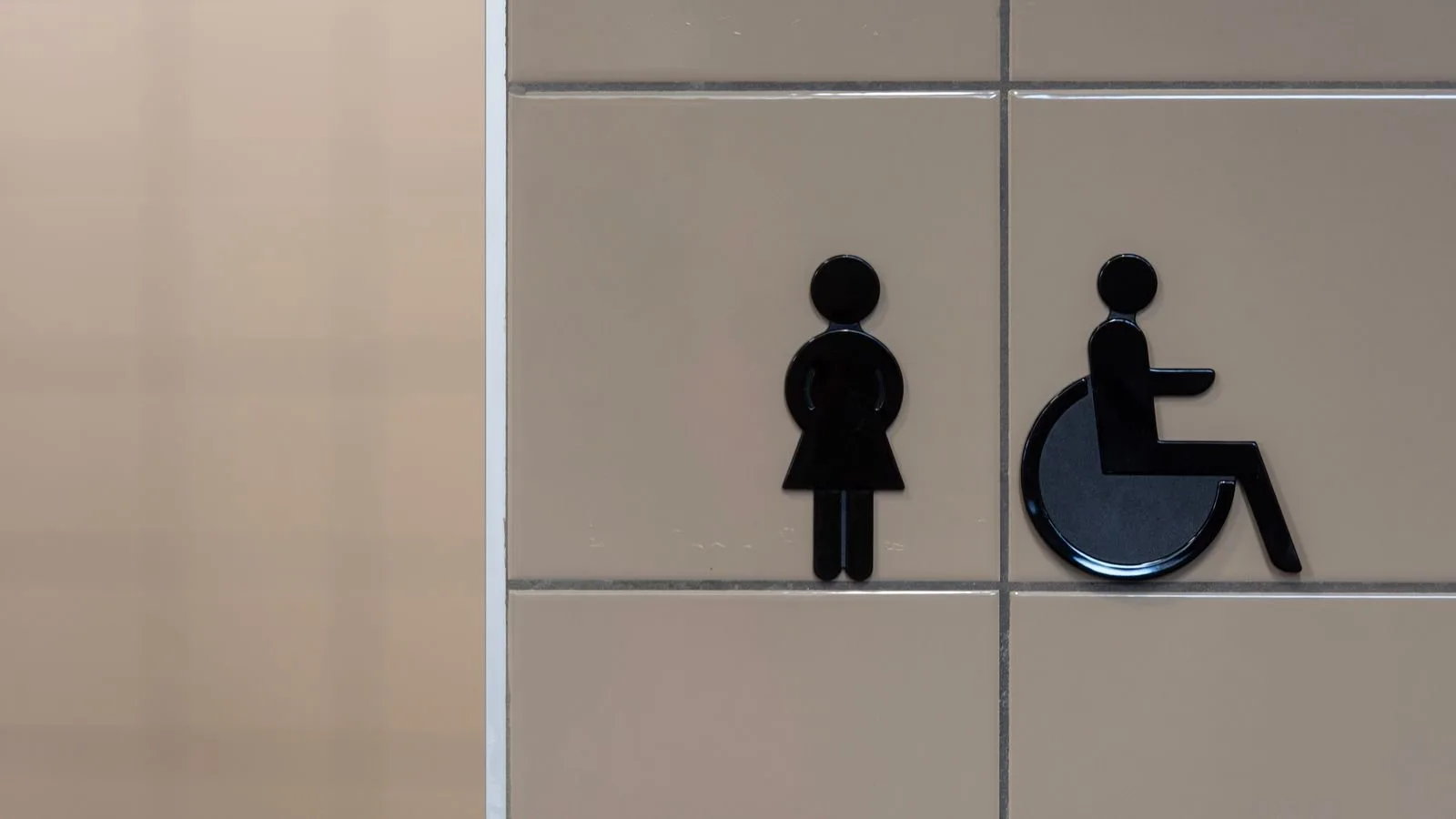
Wheelchair icon
Marks the accessible stall — which almost always contains a Western-style seated toilet.
Quick questions
No. Sit toilets are standard in international hotels, airports, modern malls and most newer attractions. Squat toilets are still the default in older public restrooms, metro stations and rural or scenic areas — so it helps to know how to use both.
Check for a bin. If there is a wastebasket beside the toilet, that is your signal to put used paper in the bin rather than flushing it — older Chinese plumbing is narrow and clogs easily. In modern malls, hotels and airports, flushing is normally fine.
In practice, yes at large chains — McDonald’s, KFC and Starbucks are the reliable standbys and rarely challenge anyone. At small independent restaurants, ordering something first is the courteous move.
Look for the accessible stall marked with a wheelchair icon — it almost always has a Western-style seated toilet. Failing that, head to a hotel lobby, a high-end mall or an airport.
It depends entirely on where you are. Airports, high-speed rail stations, shopping malls and international hotels are generally well maintained. Older street facilities vary widely. Your own tissue and hand sanitizer make the difference.
Usually no — the great majority are free. A few older street or market toilets still charge 1–2 RMB, so keep a little cash handy. Some newer dispensers take QR payment, but they often fail with foreign cards and phone numbers.
Worried about your stomach? Read this
Toilets are only half the hygiene story. Our food and water guide covers the rest — what to eat, what to skip, and the tap water rule.